
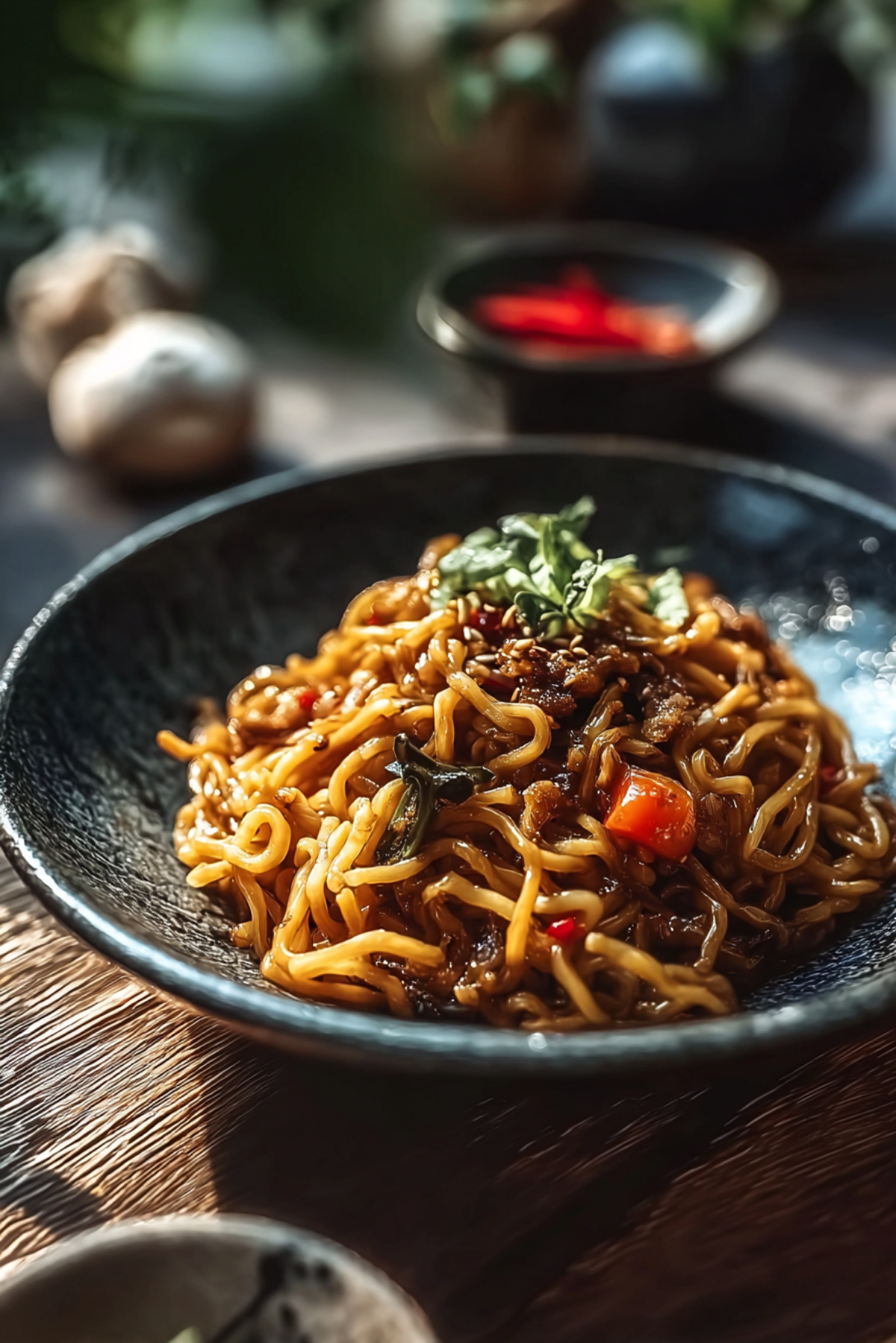
There’s something truly comforting about a sizzling plate of Yakisoba Noodles, the sound of the noodles tossing in a hot pan, and the savory aroma of soy sauce and vegetables filling the kitchen. This Japanese street food favorite is a perfect blend of chewy noodles, crisp vegetables, and a flavorful sauce that strikes the balance between sweet, salty, and tangy. It’s the kind of dish that makes you smile after the first bite, and before you know it, the plate’s empty.
Behind the Recipe
Yakisoba has always been one of those recipes that brings people together. Whether it’s made at a summer festival in Japan or in your own kitchen on a busy weeknight, the magic lies in its simplicity. The story behind Yakisoba is humble yet heartwarming. It’s the Japanese adaptation of Chinese chow mein, and over time it became a street food legend. The sizzling sound of the wok, the smoky aroma, and the joyful act of sharing it straight from the pan make this dish feel alive.
Recipe Origin or Trivia
Yakisoba literally means “fried noodles,” but despite the name, it doesn’t use soba noodles made from buckwheat. Instead, it uses Chinese-style wheat noodles similar to ramen. It became popular in Japan during the early 20th century when street vendors started serving it at festivals. Today, it’s often topped with pickled ginger and seaweed powder, giving it that signature Japanese twist that everyone loves.
Why You’ll Love Yakisoba Noodles
There are so many reasons why Yakisoba deserves a spot on your table tonight.
Versatile: Works beautifully with any vegetables or proteins you have on hand, so you can make it your own.
Budget-Friendly: Simple pantry ingredients turn into a restaurant-worthy meal.
Quick and Easy: Cooks in under 30 minutes, perfect for busy nights.
Customizable: Swap sauces, noodles, or veggies to fit your mood or diet.
Crowd-Pleasing: Its bold umami flavors and irresistible aroma appeal to everyone.
Make-Ahead Friendly: The sauce can be made ahead, saving you time later.
Great for Leftovers: Just reheat in a skillet for an instant flavor-packed meal.
Chef’s Pro Tips for Perfect Results
Cooking Yakisoba is all about timing and heat. Here’s how to master it.
- Use high heat to get that slightly charred, smoky flavor.
- Don’t overcrowd the pan, cook in batches if needed.
- Loosen the noodles before stir-frying to avoid clumping.
- Add sauce gradually, tossing the noodles to coat evenly.
- Finish with a drizzle of sesame oil for that final layer of aroma.
Kitchen Tools You’ll Need
Before we dive into cooking, gather these kitchen essentials.
Wok or Large Skillet: For even, high-heat cooking.
Tongs or Chopsticks: To toss noodles easily.
Cutting Board and Knife: For prepping vegetables.
Measuring Cups and Spoons: To get the sauce balance just right.
Mixing Bowl: To combine the Yakisoba sauce.
Ingredients in Yakisoba Noodles
Every ingredient plays its part in building that bold, balanced flavor.
- Yakisoba Noodles: 14 oz (400 g), the star of the dish, chewy and perfect for soaking up sauce.
- Chicken or Tofu: 1 cup sliced thinly, adds protein and texture.
- Cabbage: 2 cups shredded, brings sweetness and crunch.
- Carrot: 1 large, julienned, adds color and freshness.
- Onion: 1 small, sliced thinly, for a sweet and savory base.
- Green Bell Pepper: 1, sliced, gives a mild earthy note.
- Soy Sauce: 3 tablespoons, the savory backbone of the dish.
- Worcestershire Sauce: 2 tablespoons, adds tangy depth.
- Oyster Sauce: 1 tablespoon, gives rich umami flavor.
- Sugar: 1 teaspoon, balances the saltiness.
- Sesame Oil: 1 teaspoon, for fragrance.
- Vegetable Oil: 2 tablespoons, for stir-frying.
- Green Onions: 2, chopped, for garnish.
- Pickled Ginger (Beni Shoga): For a traditional finish.
Ingredient Substitutions
Sometimes you need to improvise, and that’s totally fine.
Yakisoba Noodles: Use ramen or udon noodles.
Chicken: Replace with shrimp, beef, or tofu.
Oyster Sauce: Swap with hoisin sauce.
Worcestershire Sauce: Use tonkatsu or soy sauce mixed with a splash of vinegar.
Vegetable Oil: Any neutral oil like canola or sunflower works.
Ingredient Spotlight
Worcestershire Sauce: This Western ingredient gives Yakisoba its signature tang and sweetness, blending beautifully with soy and oyster sauces.
Cabbage: Its mild sweetness and crunch add texture and balance the rich noodles perfectly.
Instructions for Making Yakisoba Noodles
Let’s get cooking! Here are the steps you’re going to follow.
- Preheat Your Equipment: Heat a wok or large skillet over medium-high heat and drizzle with vegetable oil.
- Combine Ingredients: Mix soy sauce, Worcestershire sauce, oyster sauce, sugar, and sesame oil in a small bowl.
- Prepare Your Cooking Vessel: Add the chicken or tofu and cook until golden and nearly cooked through.
- Assemble the Dish: Toss in onions, cabbage, carrots, and bell peppers. Stir-fry until they begin to soften.
- Cook to Perfection: Add the noodles, breaking them apart gently, then pour in the sauce. Toss everything until evenly coated and glossy.
- Finishing Touches: Sprinkle chopped green onions and toss once more.
- Serve and Enjoy: Serve hot, topped with pickled ginger for that perfect bite.
Texture & Flavor Secrets
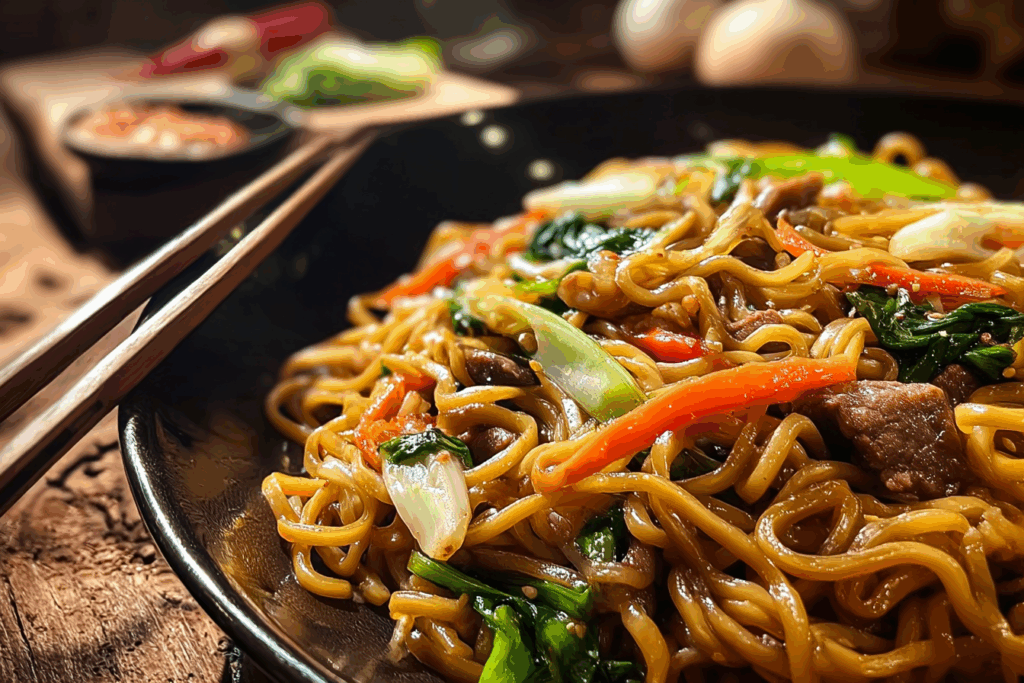
Yakisoba is all about contrasts. The noodles are soft yet slightly crisp at the edges, while the vegetables stay crunchy and fresh. The sauce clings to every strand, coating them in a glossy, umami-rich layer that’s sweet, savory, and a little tangy. It’s a sensory explosion in every bite.
Cooking Tips & Tricks
- Stir-fry quickly to keep the veggies crisp.
- Loosen pre-cooked noodles under warm water before adding them.
- Taste the sauce before adding to adjust sweetness or saltiness.
What to Avoid
- Don’t overcook the noodles, they’ll turn mushy.
- Avoid too much sauce, it can make the dish soggy.
- Don’t use low heat, or you’ll miss out on that signature smoky flavor.
Nutrition Facts
Servings: 4
Calories per serving: 390
Note: These are approximate values.
Preparation Time
Prep Time: 10 minutes
Cook Time: 15 minutes
Total Time: 25 minutes
Make-Ahead and Storage Tips
You can make the sauce up to two days in advance and store it in the fridge. Cooked Yakisoba keeps well in an airtight container for up to three days. Reheat it in a skillet with a splash of water to bring it back to life. It’s not ideal for freezing, as noodles may lose texture, but it’s perfect for meal prep.
How to Serve Yakisoba Noodles
Serve Yakisoba on a flat plate or cast-iron skillet for that street-food vibe. Top it with pickled ginger, a sprinkle of aonori (seaweed flakes), or even a drizzle of Japanese mayo if you’re feeling adventurous. Pair it with miso soup or gyoza for a complete meal.
Creative Leftover Transformations
- Turn leftovers into a Yakisoba omelet by folding them into a fluffy egg.
- Reheat and wrap them in a tortilla for a quick noodle wrap.
- Mix with rice for a quick fried rice twist.
Additional Tips
Add a splash of sake-free mirin for a mild sweetness if desired. You can also toss in sesame seeds for crunch or chili oil for heat. Play around until it feels like your version of comfort in a bowl.
Make It a Showstopper
Serve Yakisoba in a deep ceramic bowl with chopsticks crossed on top. Garnish with a handful of shredded nori and a few strands of pickled ginger. The glossy noodles and colorful vegetables make for a stunning visual.
Variations to Try
- Spicy Yakisoba: Add chili paste or sriracha for a fiery kick.
- Seafood Yakisoba: Mix in shrimp, squid, or scallops.
- Vegetarian Yakisoba: Skip the meat and load up on mushrooms and broccoli.
- Teriyaki Yakisoba: Swap the sauce for teriyaki for a sweeter flavor.
- Kimchi Yakisoba: Add chopped kimchi for a tangy twist.
FAQ’s
Q1: Can I use ramen noodles instead of Yakisoba noodles?
Yes, ramen noodles work well as long as you don’t overcook them.
Q2: Can I make it vegan?
Absolutely, just skip oyster sauce and use tofu as your protein.
Q3: How do I get the smoky flavor?
Use high heat and toss the noodles quickly to char slightly.
Q4: Can I prepare Yakisoba in advance?
You can cook and store it, then reheat in a skillet when ready.
Q5: What vegetables go best in Yakisoba?
Cabbage, carrots, onions, and bell peppers are classics, but you can use any.
Q6: How do I prevent sticky noodles?
Rinse pre-cooked noodles in warm water before stir-frying.
Q7: Is Yakisoba gluten-free?
Not typically, but you can use gluten-free noodles and tamari sauce.
Q8: Can I add eggs to it?
Yes, scrambled or fried eggs make a great addition.
Q9: How long does it last in the fridge?
It stays fresh for up to three days when stored properly.
Q10: What can I serve with Yakisoba?
Try miso soup, tempura, or a light cucumber salad.
Conclusion
Yakisoba Noodles are more than just stir-fried noodles, they’re a flavor-packed comfort dish that brings joy to any table. With its glossy strands, savory sauce, and colorful veggies, it’s a meal that satisfies every craving. Trust me, you’re going to love this one, and once you try it, it’ll quickly become your weeknight favorite.
Print
Yakisoba Noodles
- Prep Time: 10 minutes
- Cook Time: 15 minutes
- Total Time: 25 minutes
- Yield: 4 servings
- Category: Main Course
- Method: Stir-Fry
- Cuisine: Japanese
- Diet: Halal
Description
A classic Japanese street food dish made with stir-fried noodles, vegetables, and a savory-sweet sauce. Yakisoba Noodles are quick to make, flavorful, and perfect for any meal of the day.
Ingredients
- 14 oz (400 g) Yakisoba noodles
- 1 cup chicken or tofu, sliced thinly
- 2 cups cabbage, shredded
- 1 large carrot, julienned
- 1 small onion, sliced thinly
- 1 green bell pepper, sliced
- 3 tbsp soy sauce
- 2 tbsp Worcestershire sauce
- 1 tbsp oyster sauce
- 1 tsp sugar
- 1 tsp sesame oil
- 2 tbsp vegetable oil
- 2 green onions, chopped
- Pickled ginger (Beni Shoga) for garnish
Instructions
- Heat a wok or large skillet over medium-high heat and add vegetable oil.
- In a small bowl, mix soy sauce, Worcestershire sauce, oyster sauce, sugar, and sesame oil to make the Yakisoba sauce.
- Add sliced chicken or tofu to the pan and stir-fry until nearly cooked through.
- Add onions, cabbage, carrots, and bell pepper, and stir-fry until they begin to soften.
- Add noodles to the pan, breaking them apart gently, then pour in the prepared sauce.
- Toss everything together until the noodles are evenly coated and glossy.
- Sprinkle chopped green onions and toss once more before serving.
- Top with pickled ginger and enjoy hot.
Notes
- Use high heat to get a slightly smoky flavor.
- Loosen pre-cooked noodles under warm water before adding them to prevent clumping.
- Adjust the sauce to your taste by adding more soy sauce or sugar if needed.
- Perfect for meal prep, as leftovers taste even better the next day.
Nutrition
- Serving Size: 1 plate
- Calories: 390
- Sugar: 5 g
- Sodium: 870 mg
- Fat: 11 g
- Saturated Fat: 2 g
- Unsaturated Fat: 8 g
- Trans Fat: 0 g
- Carbohydrates: 55 g
- Fiber: 3 g
- Protein: 18 g
- Cholesterol: 35 mg