
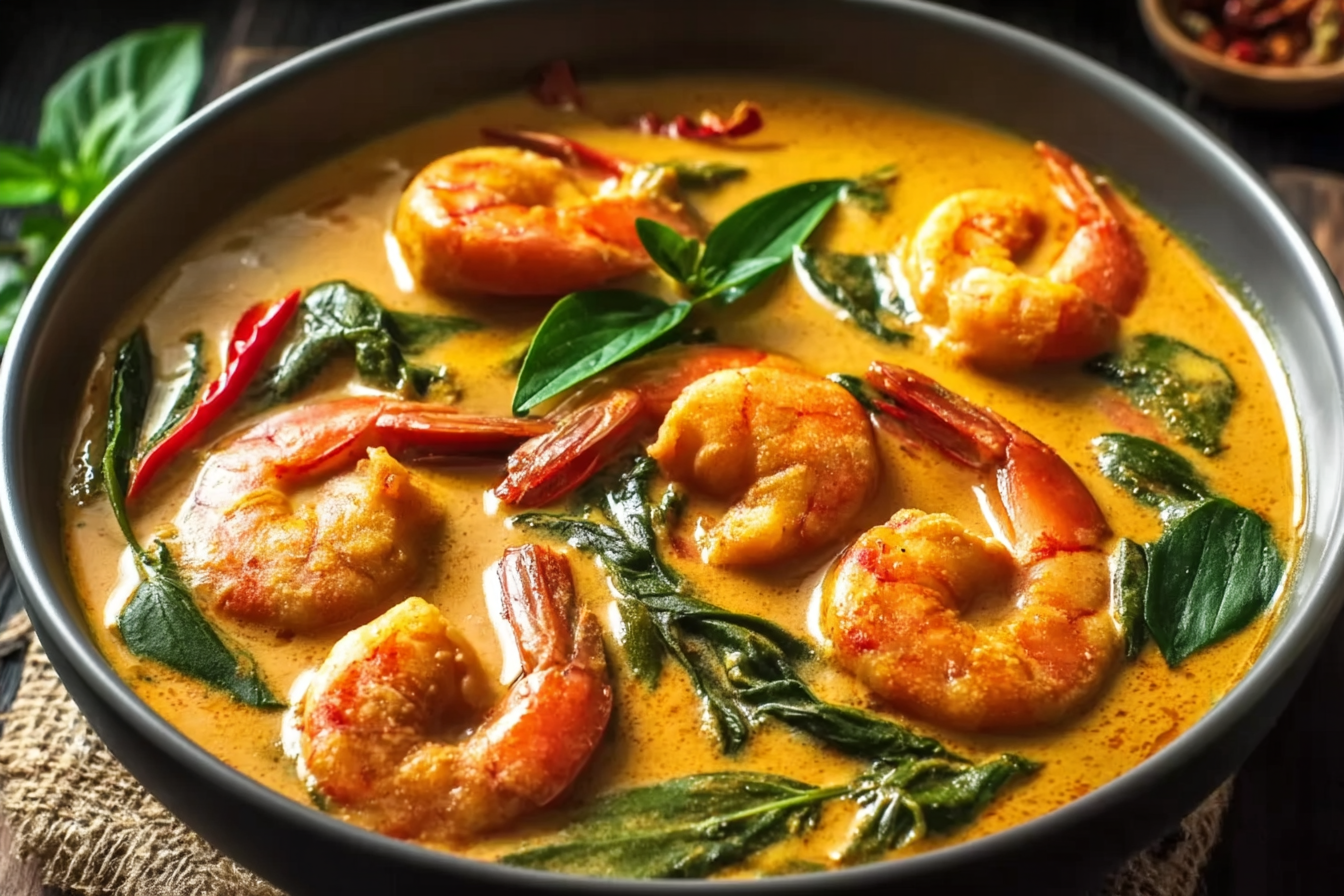
There’s something magical about the way a fragrant curry bubbles on the stove, filling the kitchen with the warm perfume of coconut milk, spices, and herbs. Thai Panang Curry with Prawns is the kind of dish that feels both comforting and exotic, with its creamy red sauce clinging to tender shrimp and vegetables, offering just the right balance of sweet, savory, and mildly spicy flavors. Trust me, you’re going to love this one — it’s worth every bite.
Behind the Recipe
This recipe was born out of my love for Thai cuisine, especially the kind that instantly transports you to bustling street markets lined with sizzling woks and the aroma of lemongrass drifting through the air. I first tried Panang Curry in a tiny family-run eatery in Bangkok, where the chef proudly told me their curry paste recipe had been passed down for three generations. Bringing that memory back to my own kitchen, I’ve crafted a version that’s both approachable and true to its roots.
Recipe Origin or Trivia
Panang Curry hails from Central Thailand and is considered a “milder cousin” of the spicier Thai red curry. Its name is thought to come from the Malay word “penang”, meaning island, though others say it refers to the traditional method of grilling meat across a split bamboo stick. Unlike other Thai curries, Panang is thicker, creamier, and often has a subtle nutty flavor thanks to peanuts ground into the paste. Served with shrimp, it becomes a delicate yet indulgent dish that represents the harmony of Thai flavors.
Why You’ll Love Thai Panang Curry with Prawns (Shrimp)
Cooking this curry isn’t just about making dinner, it’s about creating an experience. And here’s why it will win you over every single time:
Versatile: Works with shrimp, chicken, tofu, or even just vegetables.
Budget-Friendly: A handful of fresh prawns and pantry staples turn into a restaurant-worthy dish.
Quick and Easy: Ready in under 30 minutes, perfect for busy weeknights.
Customizable: Adjust the spice level, add more veggies, or even swap in noodles instead of rice.
Crowd-Pleasing: The creamy, mildly spiced sauce is a universal favorite.
Make-Ahead Friendly: The flavors deepen beautifully when made a few hours ahead.
Great for Leftovers: It reheats well and makes lunch the next day something to look forward to.
Chef’s Pro Tips for Perfect Results
If you want this dish to shine like it came from a Thai kitchen, keep these insider tips in mind:
- Use full-fat coconut milk for that velvety texture.
- Sear the prawns quickly so they stay plump and juicy.
- Simmer the curry gently, never at a rolling boil, to preserve its creamy consistency.
- Taste as you go — balance is everything in Thai cooking.
Kitchen Tools You’ll Need
Before diving in, let’s set the stage with the right tools:
Wok or Deep Skillet: Essential for stir-frying and simmering the curry.
Sharp Knife: To cleanly devein and slice the prawns and vegetables.
Wooden Spoon or Spatula: Perfect for stirring without scratching the pan.
Measuring Cups and Spoons: Ensures consistent flavor balance.
Serving Bowls: Wide and shallow bowls highlight the beauty of this curry.
Ingredients in Thai Panang Curry with Prawns (Shrimp)
Every ingredient plays a role in building the creamy, spicy-sweet harmony of this dish. Here’s what you’ll need:
- Large Prawns (Shrimp): 500 g, peeled and deveined, the star protein bringing sweetness and tenderness.
- Panang Curry Paste: 3 tablespoons, the heart of the dish with its chili, lemongrass, and peanut flavors.
- Coconut Milk: 400 ml can, gives the curry its creamy, rich base.
- Fish Sauce: 2 tablespoons, adds savory depth.
- Palm Sugar (or Brown Sugar): 1 tablespoon, balances the heat with gentle sweetness.
- Kaffir Lime Leaves: 3, torn into halves, for their citrusy aroma.
- Red Bell Pepper: 1, thinly sliced, adds crunch and color.
- Green Beans: 100 g, trimmed, for freshness and texture.
- Peanuts (unsalted, crushed): 2 tablespoons, for a nutty undertone.
- Vegetable Oil: 1 tablespoon, for frying the paste.
- Thai Basil Leaves: Handful, for a fragrant finishing touch.
- Cooked Jasmine Rice: To serve, soaking up all the curry goodness.
Ingredient Substitutions
Sometimes ingredients need a little flexibility, and that’s perfectly fine:
Prawns: Chicken or tofu.
Palm Sugar: Brown sugar or honey.
Fish Sauce: Soy sauce for a vegetarian option.
Kaffir Lime Leaves: A mix of lime zest and juice.
Panang Curry Paste: Red curry paste with a tablespoon of peanut butter.
Ingredient Spotlight
Kaffir Lime Leaves: These glossy, dark-green leaves are prized in Thai cooking for their bright, floral citrus aroma. They elevate the curry with freshness you can’t get from lime juice alone.
Panang Curry Paste: Richer and nuttier than red curry paste, it’s the ingredient that gives this dish its signature flavor.
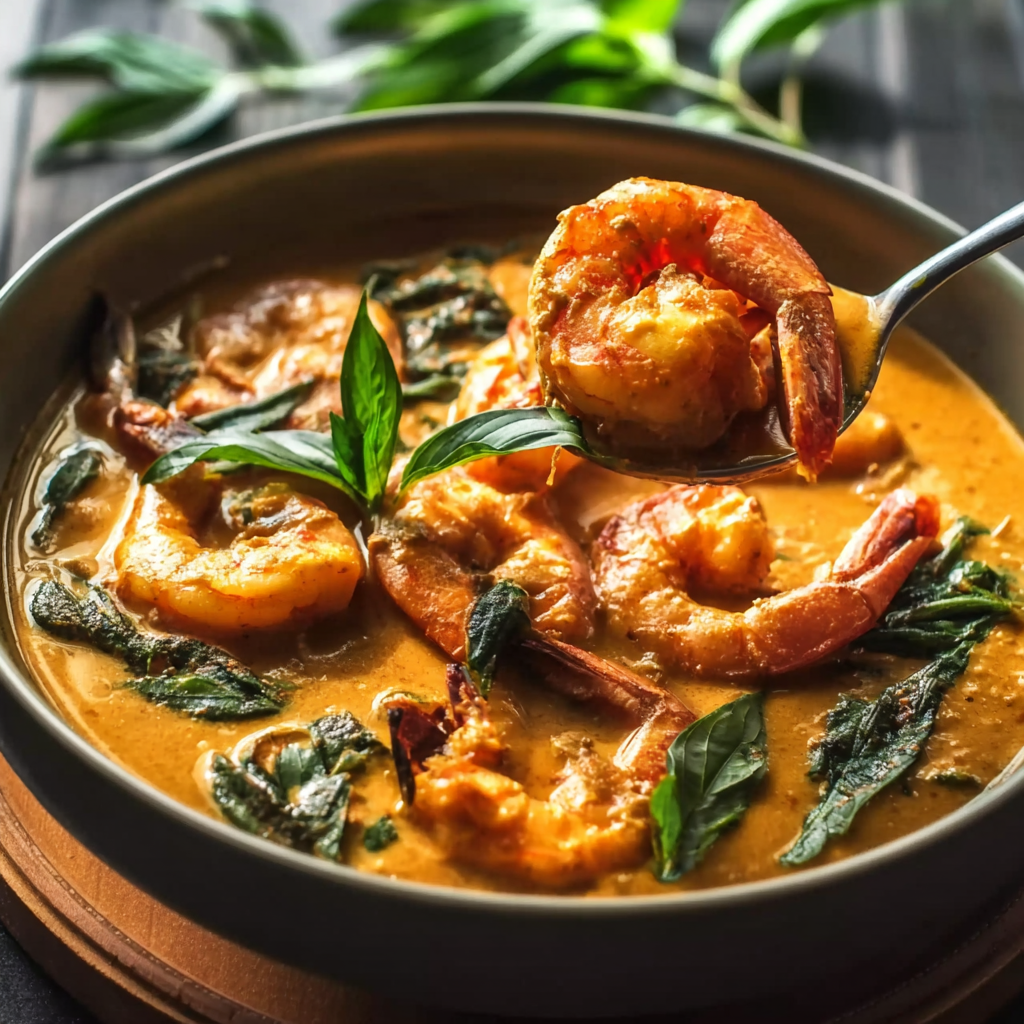
Instructions for Making Thai Panang Curry with Prawns (Shrimp)
Cooking this dish is a joyful journey. Here’s how you’ll bring it all together:
- Preheat Your Equipment: Heat a wok or deep skillet over medium heat until warm.
- Combine Ingredients: Add oil, then stir in the Panang curry paste. Fry gently until fragrant.
- Prepare Your Cooking Vessel: Pour in half the coconut milk and stir until the paste and milk are smooth and aromatic.
- Assemble the Dish: Add the prawns, bell pepper, and green beans, coating them in the sauce.
- Cook to Perfection: Pour in the remaining coconut milk, fish sauce, and palm sugar. Add kaffir lime leaves. Simmer gently for 5–7 minutes until prawns are pink and cooked.
- Finishing Touches: Stir in Thai basil leaves and crushed peanuts. Adjust seasoning with extra fish sauce or sugar if needed.
- Serve and Enjoy: Spoon the curry over warm jasmine rice and savor every creamy, aromatic bite.
Texture & Flavor Secrets
This curry is all about contrasts. The prawns stay tender and juicy, the vegetables bring crunch, and the sauce wraps everything in a silky blanket of coconut cream. The sweetness of palm sugar, the salty kick of fish sauce, and the citrus lift from kaffir lime leaves create a flavor balance that dances on the palate.
Cooking Tips & Tricks
Little touches make big differences:
- Always fry curry paste before adding liquids to awaken its full flavor.
- Use fresh prawns for the sweetest taste and best texture.
- Add vegetables toward the end to keep their crunch.
What to Avoid
Here are a few things to watch out for:
- Overcooking prawns, they turn rubbery quickly.
- Boiling the curry too hard, it can split the coconut milk.
- Skipping kaffir lime leaves, they are a key flavor builder.
Nutrition Facts
Servings: 4
Calories per serving: ~380
Note: These are approximate values.
Preparation Time
Prep Time: 10 minutes
Cook Time: 20 minutes
Total Time: 30 minutes
Make-Ahead and Storage Tips
This curry is even better the next day as the flavors meld together. You can prepare the sauce up to a day ahead, refrigerate it, and then reheat gently before adding the prawns. Store leftovers in an airtight container in the fridge for up to 3 days. For longer storage, freeze the sauce without prawns for up to 2 months. Reheat slowly to preserve the creamy texture.
How to Serve Thai Panang Curry with Prawns (Shrimp)
Serve this curry piping hot over a fluffy mound of jasmine rice. Garnish with fresh Thai basil and a sprinkle of peanuts for added texture. Pair it with a crisp cucumber salad or even a side of Thai spring rolls to complete the meal.
Creative Leftover Transformations
Leftovers don’t have to be boring. Here are some fun ways to reinvent them:
- Toss the curry sauce with rice noodles for a Thai-inspired pasta.
- Use it as a topping for baked potatoes.
- Stir in extra vegetables for a quick lunchtime stir-fry.
Additional Tips
For maximum freshness, add Thai basil at the very last minute. If you prefer more heat, add a few slices of fresh red chili. And remember, curry thickens as it cools, so add a splash of water when reheating to loosen the sauce.
Make It a Showstopper
Presentation matters. Serve in wide bowls so the prawns and vegetables peek through the rich sauce. Garnish with a sprig of basil and a few lime wedges on the side for a pop of color. A sprinkle of crushed peanuts adds crunch and visual appeal.
Variations to Try
- Vegetarian Panang Curry: Replace prawns with tofu and add mushrooms.
- Panang Curry with Chicken: Swap shrimp for thinly sliced chicken breast.
- Seafood Mix Panang Curry: Add squid, scallops, and shrimp for a deluxe version.
- Extra Spicy Panang: Stir in sliced Thai bird’s eye chilies.
- Panang Curry Soup: Add more coconut milk and broth for a lighter, soupy dish.
FAQ’s
1. Can I use frozen shrimp?
Yes, just thaw them completely and pat dry before cooking.
2. Is Panang Curry very spicy?
It’s milder than red curry, but you can adjust the spice level by adding chilies.
3. Can I make this vegan?
Yes, replace fish sauce with soy sauce and prawns with tofu or vegetables.
4. What’s the difference between Panang and Red Curry?
Panang is thicker, creamier, and often has peanuts, while red curry is lighter and spicier.
5. Can I use light coconut milk?
You can, but it won’t be as creamy.
6. How do I store leftovers?
Keep them in an airtight container in the fridge for up to 3 days.
7. Can I freeze Panang Curry?
Yes, the sauce freezes well. Add shrimp after reheating for best results.
8. Do I need kaffir lime leaves?
They add authenticity, but lime zest and juice can substitute in a pinch.
9. What can I serve with this curry?
Jasmine rice, sticky rice, or rice noodles are all great companions.
10. How can I thicken my curry?
Simmer uncovered for a few minutes or add a little extra curry paste.
Conclusion
Thai Panang Curry with Prawns is one of those dishes that brings comfort and excitement to the same spoonful. It’s creamy, fragrant, and bursting with flavor, yet simple enough to whip up on a busy evening. Whether you’re cooking for yourself, your family, or a dinner party, this curry is a total game-changer. Give it a try, and let the aromas of Thailand fill your kitchen — and your heart.
Print
Thai Panang Curry with Prawns (Shrimp)
- Prep Time: 10 minutes
- Cook Time: 20 minutes
- Total Time: 30 minutes
- Yield: 4 servings
- Category: Main Dish
- Method: Stovetop
- Cuisine: Thai
- Diet: Halal
Description
A creamy, fragrant Thai Panang Curry with Prawns (Shrimp), blending coconut milk, curry paste, kaffir lime, and fresh herbs into a comforting yet exotic dish that’s ready in under 30 minutes.
Ingredients
- 500 g Large Prawns (Shrimp), peeled and deveined
- 3 tbsp Panang Curry Paste
- 400 ml Coconut Milk
- 2 tbsp Fish Sauce
- 1 tbsp Palm Sugar (or Brown Sugar)
- 3 Kaffir Lime Leaves, torn into halves
- 1 Red Bell Pepper, thinly sliced
- 100 g Green Beans, trimmed
- 2 tbsp Peanuts (unsalted, crushed)
- 1 tbsp Vegetable Oil
- Handful of Thai Basil Leaves
- Cooked Jasmine Rice, for serving
Instructions
- Preheat Your Equipment: Heat a wok or deep skillet over medium heat until warm.
- Combine Ingredients: Add oil, then stir in the Panang curry paste. Fry gently until fragrant.
- Prepare Your Cooking Vessel: Pour in half the coconut milk and stir until the paste and milk are smooth and aromatic.
- Assemble the Dish: Add the prawns, bell pepper, and green beans, coating them in the sauce.
- Cook to Perfection: Pour in the remaining coconut milk, fish sauce, and palm sugar. Add kaffir lime leaves. Simmer gently for 5–7 minutes until prawns are pink and cooked.
- Finishing Touches: Stir in Thai basil leaves and crushed peanuts. Adjust seasoning if needed.
- Serve and Enjoy: Spoon the curry over warm jasmine rice and savor every bite.
Notes
- Do not overcook prawns, they cook quickly and can turn rubbery.
- Always fry curry paste before adding liquids to release full flavor.
- If reheating, add a splash of water to loosen the sauce.
Nutrition
- Serving Size: 1 bowl
- Calories: 380
- Sugar: 6 g
- Sodium: 920 mg
- Fat: 24 g
- Saturated Fat: 16 g
- Unsaturated Fat: 6 g
- Trans Fat: 0 g
- Carbohydrates: 20 g
- Fiber: 3 g
- Protein: 26 g
- Cholesterol: 165 mg