
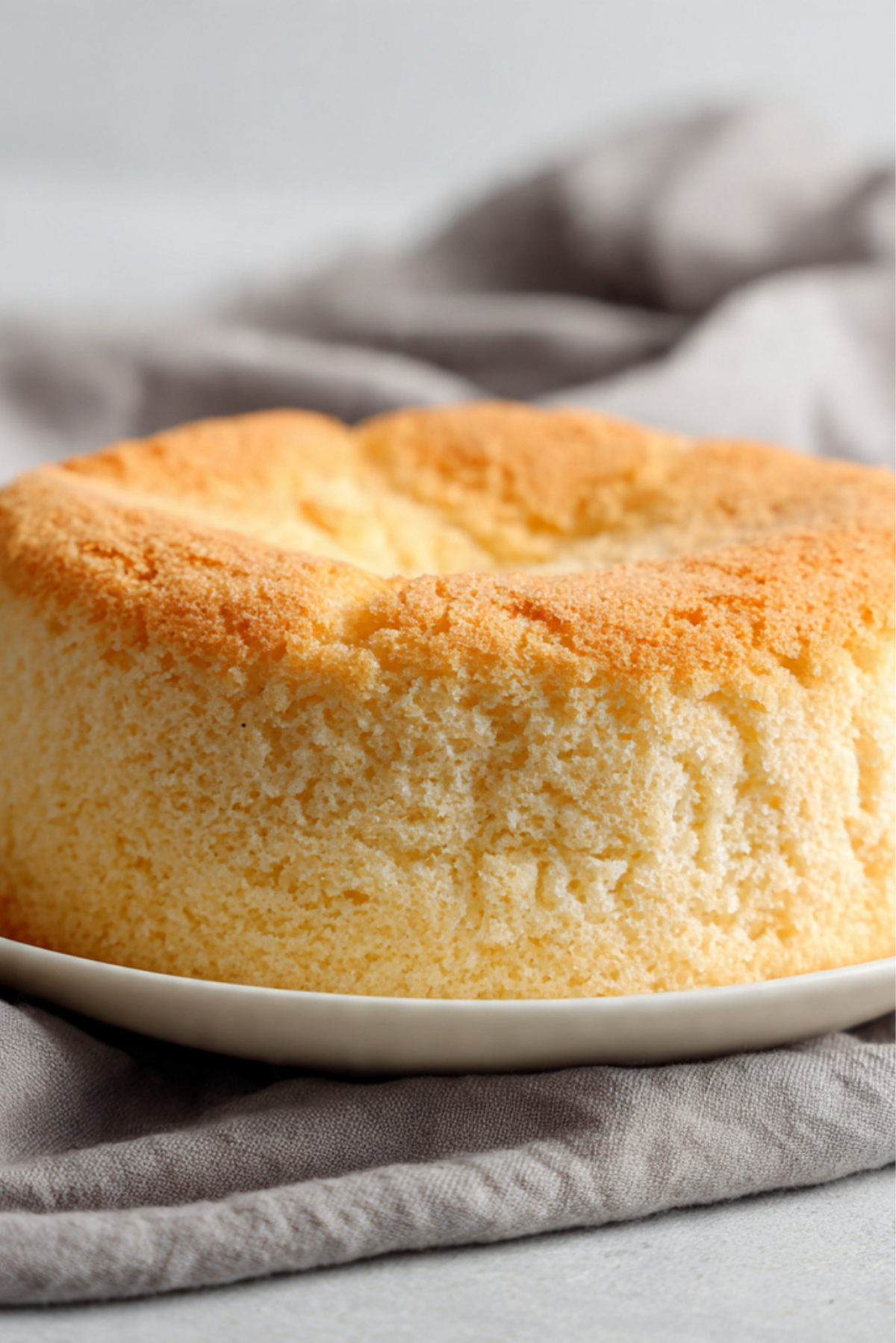
Soft, airy, and delightfully light, sponge cake is one of those timeless desserts that never goes out of style. With every bite, you’re greeted by a gentle sweetness, a tender crumb, and a hint of nostalgic comfort. Whether served plain, dusted with powdered sugar, or layered with whipped cream and fruit, this cake has a way of making any moment feel special.
Behind the Recipe
The magic of sponge cake lies in its simplicity. It was one of the first cakes I learned to bake as a kid, and I’ll never forget how amazed I was that such basic ingredients could puff up into something so fluffy and delicate. My grandmother used to whip up sponge cakes for nearly every family gathering, usually paired with a cup of tea and a good story. It became more than dessert — it was tradition.
Recipe Origin or Trivia
Sponge cake dates back centuries and has roots in European baking traditions, particularly in Italy and Spain. It’s known for not using any added fat like butter or oil, relying instead on well-beaten eggs to give it lift and structure. The classic Genoise from Italy and the airy Castella cake from Japan are both cousins of this simple yet elegant dessert. Each culture has put its spin on it, but the foundation remains the same — a celebration of texture and balance.
Why You’ll Love Sponge Cake
There’s something so comforting and versatile about a good sponge cake. Here’s why it deserves a spot in your baking rotation:
Versatile: Serve it plain, layered, rolled, or soaked in syrup — sponge cake plays well with everything.
Budget-Friendly: Made with pantry staples, this cake won’t break the bank.
Quick and Easy: Just a few steps and you’re on your way to cake heaven.
Customizable: Add zest, spices, extracts, or fillings to make it your own.
Crowd-Pleasing: Light and airy, it’s a favorite across age groups.
Make-Ahead Friendly: Bake it the day before and store until needed.
Great for Leftovers: Cube it up for trifles or mini desserts the next day.
Chef’s Pro Tips for Perfect Results
A perfect sponge cake comes down to finesse and timing. Here are a few expert tips to make sure you nail it:
- Use room temperature eggs: They whip up with more volume and help the cake rise beautifully.
- Whip those eggs like you mean it: Don’t rush this step. You want thick, pale ribbons that hold shape.
- Fold gently: Incorporate the flour and other ingredients slowly to avoid deflating all that air.
- No peeking: Avoid opening the oven door too early. The cake can collapse if the temperature drops.
- Cool upside down (if needed): For a chiffon-style sponge, invert the pan to prevent sinking.
Kitchen Tools You’ll Need
To make this sponge cake smooth and stress-free, keep these tools close by:
Mixing Bowls: For separating and whisking your eggs and dry ingredients.
Electric Mixer: A handheld or stand mixer makes beating eggs to stiff peaks a breeze.
Sifter: To aerate the flour and remove lumps.
Rubber Spatula: Ideal for folding without deflating the batter.
9-inch Round Cake Pan: The perfect size for even baking.
Parchment Paper: Keeps the cake from sticking without greasing.
Ingredients in Sponge Cake
This recipe keeps it classic and clean, letting each component shine in its own right.
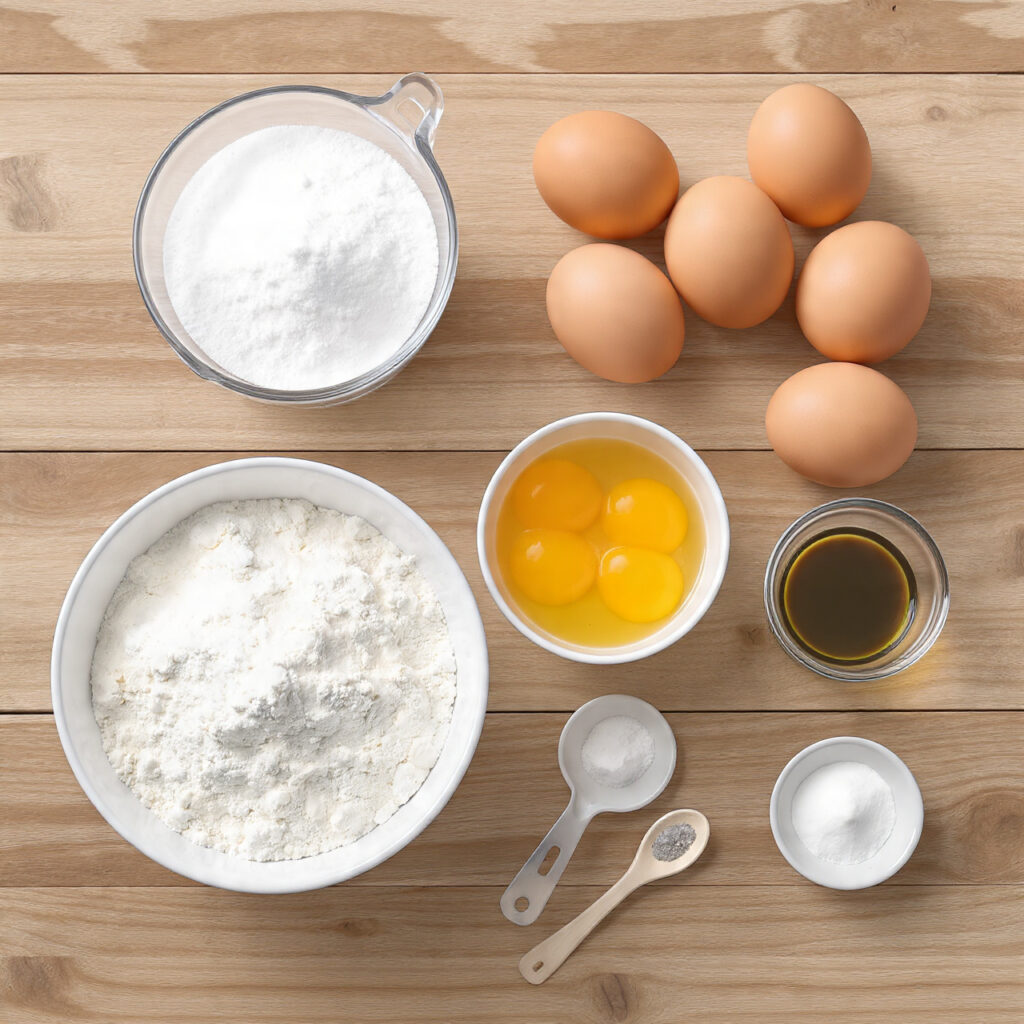
- Eggs: 6 large eggs, separated — These are the backbone, providing volume and structure.
- Granulated Sugar: 1 cup — Adds sweetness and stabilizes the whipped eggs.
- Cake Flour: 1 cup — Low-protein flour gives a tender, fine crumb.
- Salt: 1/4 teaspoon — Enhances flavor and balances sweetness.
- Vanilla Extract: 1 teaspoon — Adds warmth and depth.
- Cream of Tartar: 1/2 teaspoon — Stabilizes the egg whites for a stronger structure.
Ingredient Substitutions
Sometimes, we just don’t have everything on hand. Here are a few smart swaps:
Cake Flour: All-purpose flour sifted with cornstarch (3/4 cup all-purpose + 2 tablespoons cornstarch).
Cream of Tartar: Use 1 teaspoon of lemon juice or white vinegar.
Granulated Sugar: Superfine sugar for a finer texture (if desired).
Vanilla Extract: Almond or citrus extract for a fun twist.
Ingredient Spotlight
Eggs: These are the powerhouse of this recipe. When whipped properly, they hold air and give the cake its signature lightness.
Cake Flour: With its low protein content, cake flour keeps the texture soft and prevents the cake from becoming dense or chewy.
Instructions for Making Sponge Cake
Get ready to bake something light as air and utterly satisfying. Here’s how to bring this sponge to life:
-
Preheat Your Equipment:
Preheat the oven to 350°F (175°C). Line a 9-inch round cake pan with parchment paper at the bottom. -
Combine Ingredients:
In a clean bowl, whip the egg whites with cream of tartar until soft peaks form. Gradually add half the sugar and whip until stiff, glossy peaks. In another bowl, beat the egg yolks with the remaining sugar until pale and thick. Stir in the vanilla. -
Prepare Your Cooking Vessel:
Sift the flour and salt together. Gently fold the dry ingredients into the egg yolk mixture, then carefully fold in the egg whites in batches, preserving as much air as possible. -
Assemble the Dish:
Pour the batter into the prepared pan, smoothing the top with a spatula. -
Cook to Perfection:
Bake for 25 to 30 minutes, or until the top is golden and springs back when touched lightly in the center. -
Finishing Touches:
Let the cake cool upside down (if in a tube pan) or on a wire rack until completely cool. -
Serve and Enjoy:
Serve plain, with whipped cream and fruit, or dusted with powdered sugar.
Texture & Flavor Secrets
The beauty of sponge cake is all in its texture. The whipped eggs create a tight, springy crumb that’s both airy and moist. It’s subtly sweet, with delicate notes of vanilla that leave room for you to add bold toppings or enjoy it just as it is.
Cooking Tips & Tricks
Let’s make your baking experience even smoother with these helpful tips:
- Use metal or glass bowls for whipping egg whites — plastic can hold onto fat.
- Don’t overmix after adding flour. It can knock out the air and toughen the cake.
- Rotate your pan halfway through for even baking if your oven has hot spots.
What to Avoid
Here’s how to sidestep common baking hiccups:
- Don’t skip sifting the flour. It ensures lightness.
- Avoid under-whipping or over-whipping egg whites. Aim for firm but not dry peaks.
- Never grease the pan sides. The batter needs to climb up for a proper rise.
Nutrition Facts
Servings: 8
Calories per serving: 185
Note: These are approximate values.
Preparation Time
Prep Time: 20 minutes
Cook Time: 30 minutes
Total Time: 50 minutes
Make-Ahead and Storage Tips
Sponge cake actually gets better with time. You can bake it a day ahead and keep it wrapped at room temperature. For longer storage, wrap tightly and freeze for up to a month. Just thaw at room temperature before serving. Avoid refrigerating, as it can dry out the cake.
How to Serve Sponge Cake
This cake is a blank canvas waiting for your creativity. Serve it with:
- Fresh berries and whipped cream
- A drizzle of lemon glaze
- Layers of jam or custard
- Light dusting of powdered sugar
Pair with tea, coffee, or even a scoop of vanilla ice cream.
Creative Leftover Transformations
Don’t let leftovers go to waste. Try these fun ideas:
- Cube and layer into a fruit trifle
- Use for cake pops with a frosting binder
- Toast slices and top with sweetened ricotta and honey
- Turn into mini tiramisu cups with espresso and mascarpone
Additional Tips
- For extra moisture, brush cooled cake layers with simple syrup.
- Want to flavor it up? Add zest of lemon or orange to the yolk mixture.
- Store in an airtight container to maintain that soft texture.
Make It a Showstopper
Make your sponge cake a centerpiece with simple tricks:
- Top with sugared berries and mint leaves
- Serve on a cake stand with a lace doily
- Dust with cocoa powder or powdered sugar in a stencil pattern
- Add a thin glaze for a glossy finish
Variations to Try
- Lemon Sponge Cake: Add lemon zest and a touch of lemon juice to the batter.
- Chocolate Sponge Cake: Replace 1/4 cup of flour with unsweetened cocoa powder.
- Almond Sponge Cake: Use almond extract in place of vanilla and top with toasted almonds.
- Layered Berry Cake: Slice into layers and fill with whipped cream and fresh berries.
- Swiss Roll Style: Bake in a jelly roll pan and roll with jam or ganache.
FAQ’s
Q1: Can I use all-purpose flour instead of cake flour?
Yes, just sift it with a bit of cornstarch to lighten the texture.
Q2: Why did my sponge cake collapse?
Most likely from overmixing or opening the oven door too soon.
Q3: Can I make this gluten-free?
Yes, use a gluten-free flour blend designed for baking.
Q4: How do I know when it’s fully baked?
It should spring back in the center and a toothpick should come out clean.
Q5: Can I double the recipe for a larger cake?
Yes, just adjust the pan size and extend the baking time.
Q6: Is sponge cake the same as angel food cake?
Not quite. Angel food uses only egg whites, while sponge uses whole eggs.
Q7: Can I frost this cake?
Absolutely. Whipped cream or buttercream works beautifully.
Q8: What’s the best way to store leftovers?
Wrap tightly and keep at room temperature or freeze for longer storage.
Q9: Can I add fruits or nuts into the batter?
You can, but keep them light to avoid weighing down the sponge.
Q10: Do I need to use cream of tartar?
It helps stabilize the whites, but lemon juice or vinegar works too.
Conclusion
Sponge cake is one of those feel-good recipes that never disappoints. Light, fluffy, and endlessly versatile, it’s a baking classic for a reason. Whether you’re serving it at a celebration or enjoying a quiet slice with tea, it brings warmth and sweetness to every occasion. Trust me, it’s worth every bite.
Print
Sponge Cake
- Prep Time: 20 minutes
- Cook Time: 30 minutes
- Total Time: 50 minutes
- Yield: 8 servings
- Category: Dessert
- Method: Baking
- Cuisine: European
- Diet: Vegetarian
Description
This classic sponge cake is light, airy, and gently sweet with a delicate crumb. Perfect on its own or layered with cream and fruit, it’s a timeless treat that’s both simple and elegant.
Ingredients
- 6 large eggs, separated
- 1 cup granulated sugar
- 1 cup cake flour
- 1/4 teaspoon salt
- 1 teaspoon vanilla extract
- 1/2 teaspoon cream of tartar
Instructions
- Preheat the oven to 350°F (175°C). Line a 9-inch round cake pan with parchment paper on the bottom only.
- In a clean bowl, whip the egg whites with cream of tartar until soft peaks form. Gradually add half the sugar and continue whipping until stiff, glossy peaks form.
- In a separate bowl, beat the egg yolks with the remaining sugar until thick and pale. Stir in vanilla extract.
- Sift together cake flour and salt. Gently fold the flour mixture into the yolk mixture in batches.
- Fold in the whipped egg whites in batches, being careful not to deflate the batter.
- Pour the batter into the prepared pan and smooth the top.
- Bake for 25 to 30 minutes, until golden and the center springs back when touched.
- Let the cake cool on a wire rack. If using a tube pan, invert while cooling to prevent collapsing.
- Once completely cooled, remove from the pan, slice, and serve.
Notes
- Use room temperature eggs for maximum volume.
- Do not grease the sides of the pan to allow the cake to rise properly.
- Cool the cake upside down if using a tube pan for a more stable structure.
- Dust with powdered sugar or top with berries for extra flair.
Nutrition
- Serving Size: 1 slice
- Calories: 185
- Sugar: 20g
- Sodium: 90mg
- Fat: 3g
- Saturated Fat: 1g
- Unsaturated Fat: 2g
- Trans Fat: 0g
- Carbohydrates: 32g
- Fiber: 0g
- Protein: 6g
- Cholesterol: 125mg