
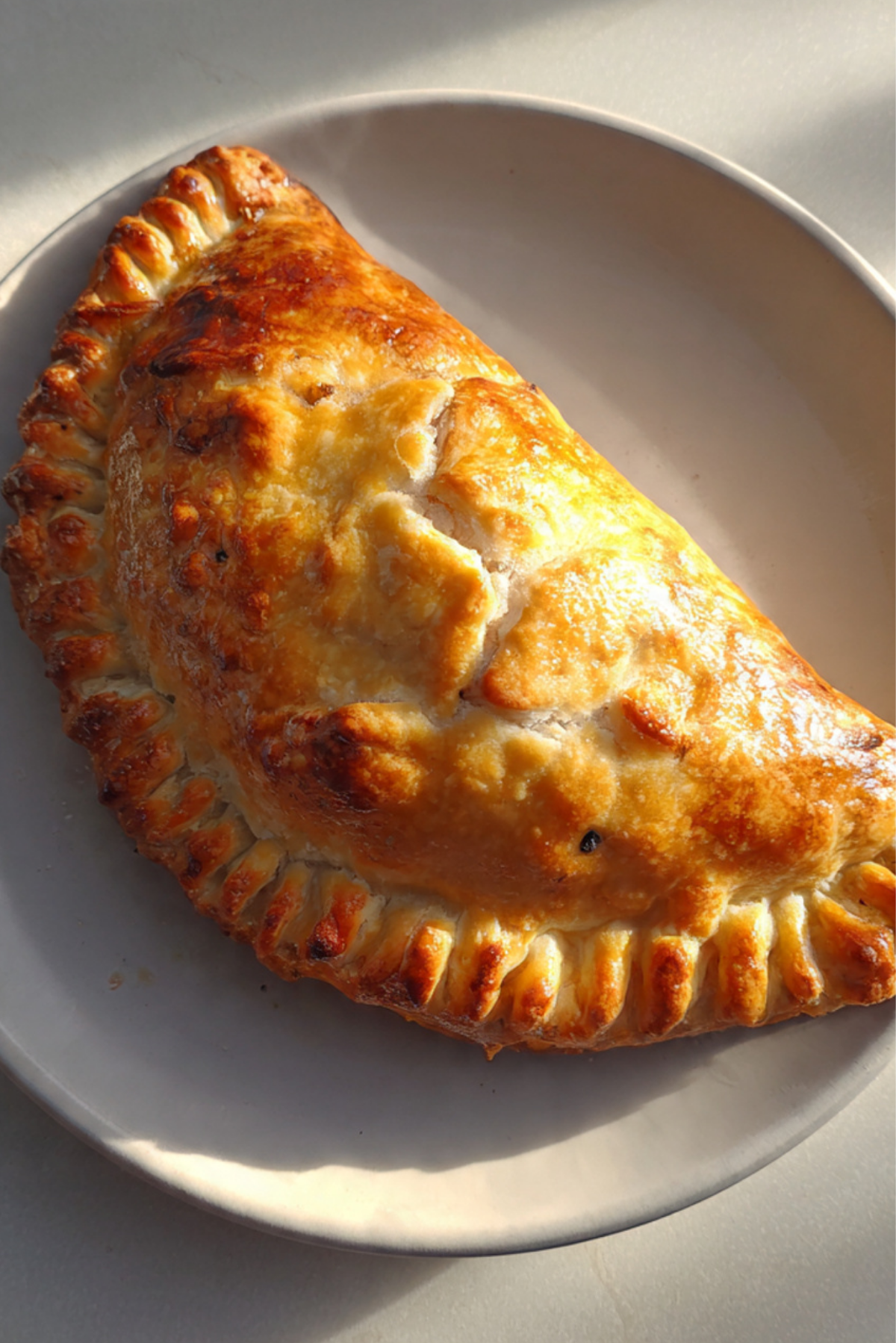
There’s something incredibly comforting about holding a warm, flaky pasty in your hands. The golden crust, perfectly crimped at the edges, gives way to a savory filling of tender meat, soft potatoes, and just the right touch of onion and seasoning. It’s the kind of meal that feels like a hug, tucked into pastry. Whether you’re enjoying it hot out of the oven or wrapped in paper for a hearty lunch on the go, pasties are all about simple, honest flavor.
Behind the Recipe
Growing up, there were few things as satisfying as walking into the kitchen and catching that buttery aroma of pasties baking. It was my grandmother’s go-to recipe for chilly afternoons and always made the house smell like something special was coming. She’d make them in batches, wrapping the leftovers in foil so we could enjoy them even days later. Every bite reminds me of that warmth and care she poured into them.
Recipe Origin or Trivia
The pasty has deep roots in Cornwall, England, where it was traditionally made as a portable meal for tin miners. With thick, crimped edges designed to be held without dirtying the rest of the food, they were the original lunchbox meal. The filling typically combined beef, potato, onion, and rutabaga or swede, all sealed within a sturdy yet flaky crust that could handle a trip underground. Today, they’ve spread across the globe, cherished for their rustic charm and satisfying flavor.
Why You’ll Love Pasty
These little parcels of deliciousness offer more than just taste. Here’s why you’ll fall for them:
Versatile: Fill them with classic beef and potato or get creative with veggies, cheese, or even breakfast fillings.
Budget-Friendly: Uses simple, affordable ingredients that go a long way.
Quick and Easy: The dough comes together quickly, and assembly is straightforward once you get the hang of it.
Customizable: You can adjust the fillings to suit your mood, cravings, or dietary needs.
Crowd-Pleasing: Great for feeding a group, and everyone loves a handheld, hearty meal.
Make-Ahead Friendly: You can prep and freeze them before baking or store baked ones for a quick reheat later.
Great for Leftovers: Got leftover meat or roasted veg? Toss them in a pasty.
Chef’s Pro Tips for Perfect Results
If you want that just-right flaky crust and a flavorful filling, keep these tricks in mind:
- Chill your dough thoroughly before rolling to keep it easy to handle.
- Cut your filling ingredients into small, uniform pieces so they cook evenly inside the pastry.
- Don’t overfill. It’s tempting, but too much filling can lead to bursting.
- Seal the edges tightly and crimp well to prevent leaks during baking.
- Brush with egg wash for that irresistible golden shine.
Kitchen Tools You’ll Need
You won’t need a full kitchen arsenal to make pasties, just a few essentials:
Mixing Bowls: For making the dough and mixing the filling.
Rolling Pin: To flatten your dough into even circles.
Baking Sheet: To bake your pasties to golden perfection.
Pastry Brush: For applying egg wash on the crust.
Knife or Pastry Cutter: To slice ingredients and cut the dough.
Ingredients in Pasty
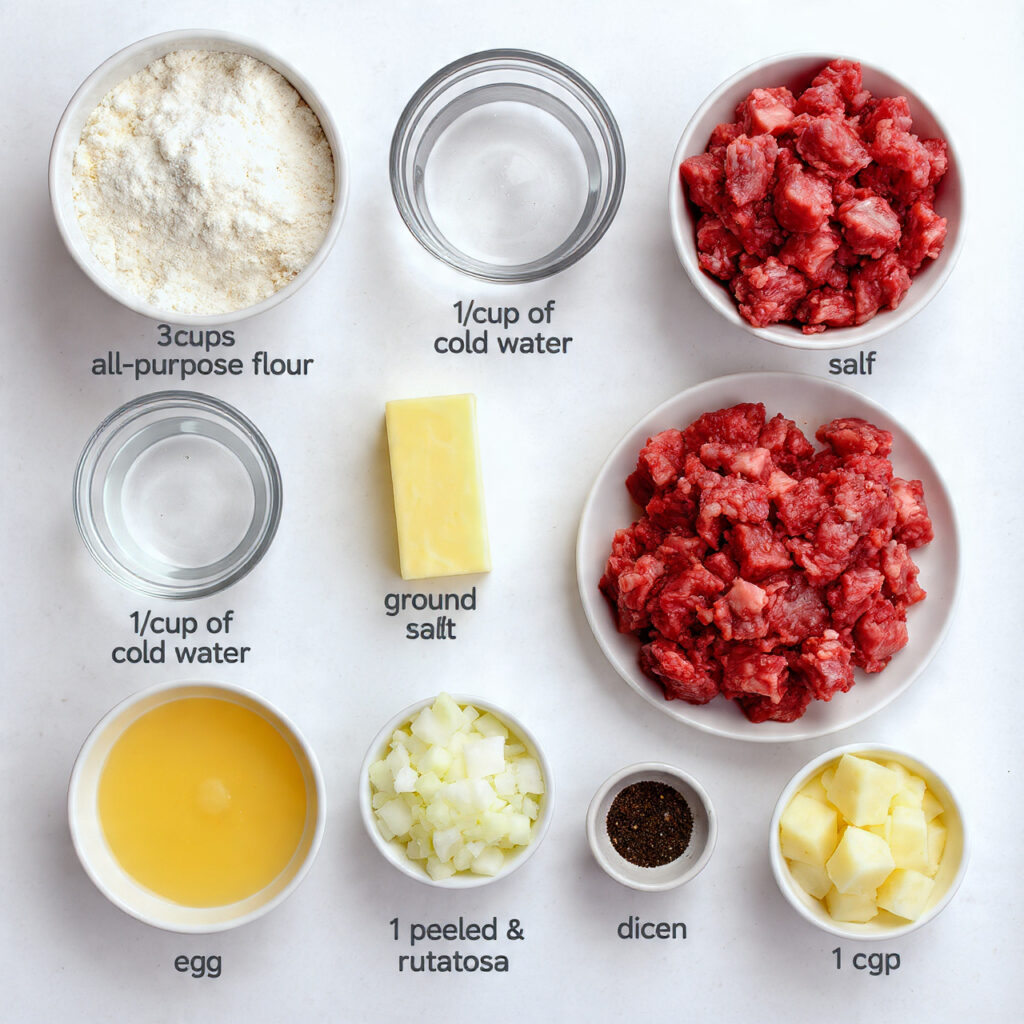
There’s beauty in the simplicity of these ingredients. Each one plays a key role in flavor and texture.
- All-Purpose Flour: 3 cups. This forms the base of the dough, giving it structure and body.
- Cold Butter: 1 cup (2 sticks). Helps create that rich, flaky crust when worked into the flour.
- Cold Water: ½ cup. Binds the dough together without warming it too much.
- Salt: 1 teaspoon. Enhances the overall flavor of the pastry.
- Ground Beef: 1 pound. The classic, juicy filling that brings hearty flavor.
- Potatoes: 2 medium, peeled and diced small. Adds body and texture, soaking up the meat juices.
- Onion: 1 medium, finely chopped. Gives sweetness and depth to the filling.
- Rutabaga (or Swede): 1 small, peeled and diced. A traditional root veggie that adds earthy contrast.
- Black Pepper: ½ teaspoon. Brings gentle heat and balance.
- Egg: 1, beaten. Used for brushing the crust to get that golden, shiny finish.
Ingredient Substitutions
Need to swap something? No problem:
Ground Beef: Ground turkey or mushrooms.
Rutabaga: Carrot or turnip.
Butter: Margarine or shortening (though butter gives best flavor).
All-Purpose Flour: Gluten-free blend.
Egg (for brushing): Milk or cream for a softer finish.
Ingredient Spotlight
Rutabaga: This humble root veggie adds a subtle sweetness and firm texture that holds up beautifully inside the pasty. It balances the richness of the meat.
Butter: Cold butter creates steam when baking, which puffs up the dough into layers of flaky, golden goodness.
Instructions for Making Pasty
Ready to make magic? Here’s how to bring your pasties to life:
-
Preheat Your Equipment:
Set your oven to 400°F (200°C) and line a baking sheet with parchment paper. -
Combine Ingredients:
In a large bowl, mix flour and salt. Cut in the butter using your fingers or a pastry cutter until crumbly. Slowly add cold water until a dough forms. Wrap and chill for 30 minutes. -
Prepare Your Cooking Vessel:
No cooking vessel needed, but prep your workspace with flour for rolling dough and keep your lined baking sheet nearby. -
Assemble the Dish:
Divide the dough into 6 equal parts. Roll each into a circle. In another bowl, mix beef, potatoes, onion, rutabaga, salt, and pepper. Place filling in the center of each dough circle, fold over, seal edges with a fork, and crimp. -
Cook to Perfection:
Brush each pasty with beaten egg. Bake for 45-50 minutes until golden brown and crisp. -
Finishing Touches:
Let them cool slightly before serving. The filling will be piping hot right out of the oven. -
Serve and Enjoy:
Serve warm with a side of brown gravy or a simple green salad for contrast.
Texture & Flavor Secrets
The crust should be buttery, flaky, and golden, giving way to a soft yet hearty interior. The diced vegetables stay tender without going mushy, and the meat remains juicy thanks to the sealed pastry environment. The balance of savory and slightly sweet flavors makes each bite feel comforting and well-rounded.
Cooking Tips & Tricks
Here’s how to level up your pasty-making game:
- Use cold butter and water to keep your pastry flaky.
- Let the pasties rest for a few minutes after baking so the steam settles.
- Freeze unbaked pasties for easy meals later. Just add a few minutes to the bake time.
What to Avoid
Even simple recipes have their pitfalls. Avoid these:
- Overfilling the pasty. It may seem generous, but it leads to breakage and leaks.
- Cutting veggies too large. They won’t cook through in time.
- Skipping the egg wash. You’ll miss that golden color and slight crunch.
Nutrition Facts
Servings: 6
Calories per serving: 520
Note: These are approximate values.
Preparation Time
Prep Time: 30 minutes
Cook Time: 50 minutes
Total Time: 1 hour 20 minutes
Make-Ahead and Storage Tips
You can easily make the dough and filling a day in advance and store them separately in the fridge. Fully assembled pasties can be frozen unbaked, then baked straight from frozen. Once baked, they store well in the fridge for up to 3 days and can be reheated in the oven to restore their crispness.
How to Serve Pasty
These hearty hand pies are perfect as a standalone lunch or dinner. Pair them with a simple salad, a bowl of soup, or some pickled veggies for contrast. For a more traditional twist, serve with brown gravy or a touch of mustard.
Creative Leftover Transformations
Leftover pasties? No problem.
- Breakfast Hash: Dice and sauté with eggs and spinach.
- Soup Topper: Slice and float on top of a bowl of vegetable soup.
- Mini Bites: Cut into chunks, reheat, and serve with dipping sauces.
Additional Tips
- Add a sprinkle of cheese inside for extra indulgence.
- If using frozen dough, let it thaw completely before rolling.
- A pinch of thyme or rosemary can add a lovely herbal note.
Make It a Showstopper
Brush the top with egg wash and sprinkle with flaky sea salt or sesame seeds. Crimp the edges decoratively for that bakery-style look. Serve on a wooden board with a sprig of fresh herbs and a ramekin of sauce for dipping.
Variations to Try
- Cheddar and Onion: Skip the meat and fill with sharp cheddar and caramelized onions.
- Chicken and Leek: Use leftover roast chicken and cooked leeks in cream sauce.
- Spicy Veggie: Fill with spiced chickpeas, sweet potato, and spinach.
- Breakfast Style: Scrambled eggs, cooked bacon, and cheddar cheese.
- Sweet Pasty: Apple and cinnamon with a dusting of sugar.
FAQ’s
Q1: Can I use store-bought pastry dough?
Yes, just make sure it’s sturdy enough to hold the filling and bake well.
Q2: Can pasties be eaten cold?
Absolutely. They’re traditionally designed to be portable and still taste great cold.
Q3: How do I stop my pasty from leaking?
Don’t overfill and make sure the edges are sealed well, crimped tightly, and egg-washed.
Q4: Can I freeze baked pasties?
Yes, wrap them tightly and freeze for up to 3 months. Reheat in a 350°F oven.
Q5: Is it okay to skip rutabaga?
Yes. Swap with carrot, parsnip, or just add more potato.
Q6: What type of potato works best?
Waxy potatoes like Yukon Gold hold their shape well inside pasties.
Q7: Can I add cheese to the filling?
Sure! A little cheddar adds a delicious richness.
Q8: Do I need to cook the filling first?
No. The filling cooks inside the pastry as it bakes.
Q9: Can I make mini pasties?
Yes, just reduce baking time to 25–30 minutes.
Q10: What’s the best way to reheat a pasty?
In the oven at 350°F for 10–15 minutes to restore crispness.
Conclusion
There’s something timeless about a good pasty. It’s humble, hearty, and endlessly comforting. Whether you stick to the traditional filling or explore creative twists, each bite is a reminder that great food doesn’t have to be complicated. Trust me, once you’ve made your own batch of golden, flaky pasties, you’ll wonder why you waited so long.
Print
Pasty
- Prep Time: 30 minutes
- Cook Time: 50 minutes
- Total Time: 1 hour 20 minutes
- Yield: 6 pasties
- Category: Main Course
- Method: Baking
- Cuisine: British
- Diet: Low Lactose
Description
These golden, flaky pasties are filled with seasoned beef, tender potatoes, and hearty root vegetables. Perfectly portable and deeply comforting, they make a satisfying meal anytime.
Ingredients
- 3 cups all-purpose flour
- 1 cup cold butter (2 sticks)
- 1/2 cup cold water
- 1 teaspoon salt
- 1 pound ground beef
- 2 medium potatoes, peeled and diced small
- 1 medium onion, finely chopped
- 1 small rutabaga, peeled and diced
- 1/2 teaspoon black pepper
- 1 egg, beaten (for egg wash)
Instructions
- Preheat oven to 400°F (200°C) and line a baking sheet with parchment paper.
- In a large bowl, mix flour and salt. Cut in the cold butter until crumbly. Slowly add water until a dough forms. Wrap and chill for 30 minutes.
- Mix ground beef, diced potatoes, onion, rutabaga, salt, and pepper in a separate bowl.
- Divide the dough into 6 pieces and roll each into a circle. Spoon filling into the center of each, fold over, seal, and crimp the edges.
- Place pasties on the baking sheet and brush with beaten egg.
- Bake for 45–50 minutes or until golden brown and crisp.
- Let cool slightly before serving.
Notes
- Freeze unbaked pasties for a quick future meal—just add extra baking time.
- Use a fork to crimp the edges tightly and prevent leaking.
- Brushing with egg wash gives a beautiful golden finish.
- Try adding a sprinkle of fresh herbs like thyme for extra flavor.
Nutrition
- Serving Size: 1 pasty
- Calories: 520
- Sugar: 3g
- Sodium: 470mg
- Fat: 30g
- Saturated Fat: 17g
- Unsaturated Fat: 11g
- Trans Fat: 0g
- Carbohydrates: 45g
- Fiber: 4g
- Protein: 16g
- Cholesterol: 85mg