
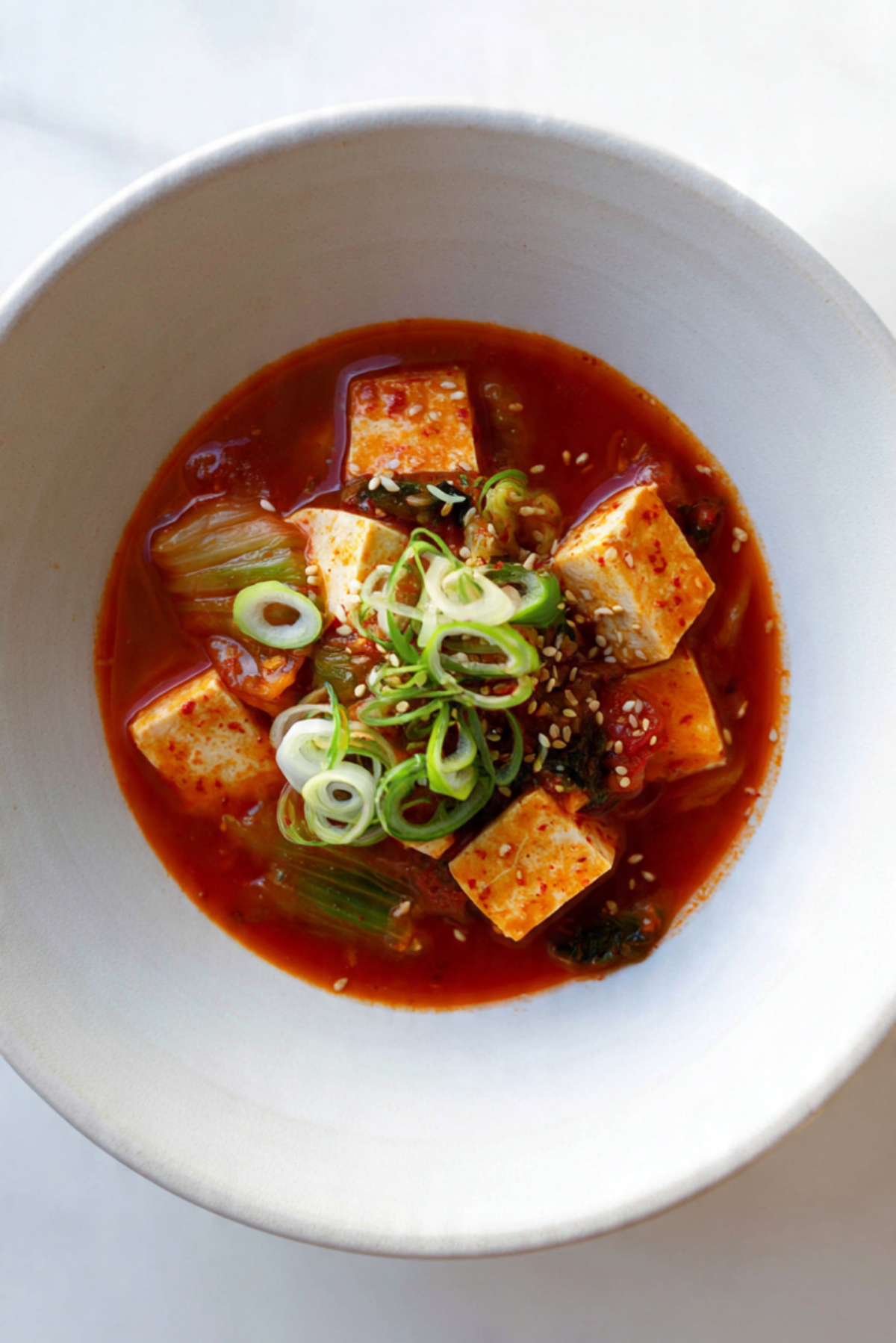
There is something deeply comforting about a bowl of bubbling, spicy stew set right in front of you, steam curling up and carrying that unmistakable aroma of fermented kimchi and garlic. Kimchi Tofu Stew is one of those dishes that wraps around you like a warm blanket on a chilly evening. The broth is fiery red, the tofu silky and tender, and every spoonful feels like a little burst of warmth. Trust me, you’re going to love this. It is bold, cozy, and surprisingly simple to bring together in your own kitchen.
A Bowl of Heat and Comfort You Will Crave Again and Again
What makes this dish so irresistible is the balance. You get tangy, spicy, savory, and slightly sweet all in one bite. The kimchi brings depth and personality, while the tofu softens everything with its creamy texture. And now let dive into where this beloved bowl of comfort actually comes from, because its roots are just as rich as its flavor.
A Glimpse Into Its Korean Roots
Kimchi Tofu Stew, often known as kimchi jjigae in Korea, is a staple in many households. It is the kind of meal that families grow up eating, especially during colder months. Traditionally, it was a clever way to use aged kimchi that had become extra tangy and bold. Over time, it evolved into a comforting everyday dish that appears on dinner tables, in small neighborhood restaurants, and even in bustling city spots.
It is deeply tied to Korean food culture, where shared meals and bubbling pots in the center of the table create moments of connection. That sense of warmth and togetherness is exactly what this stew brings into your own home.
Why This Stew Deserves a Spot in Your Weekly Rotation
Before we even get to the cooking part, let me tell you why this one is a total game changer in your kitchen.
Versatile: You can keep it simple and plant based, or adjust the spice level to suit your taste. It adapts beautifully to what you love.
Budget-Friendly: Most of the ingredients are affordable and easy to find, especially if you already enjoy keeping kimchi in your fridge.
Quick and Easy: From start to finish, it comes together in about 35 minutes, making it perfect for weeknights.
Customizable: Add mushrooms, zucchini, or extra chili paste if you want to dial up the heat.
Crowd-Pleasing: The bold flavors and comforting texture win people over quickly.
Make-Ahead Friendly: The flavors deepen as it sits, so it tastes even better the next day.
Great for Leftovers: A reheated bowl the following day feels just as satisfying, maybe even more.
And now that you are convinced, let’s talk about how to make it absolutely perfect.
Insider Secrets for the Best Flavor
A great stew is all about layering flavor, and this one is no exception.
First, use well fermented kimchi. The deeper and tangier it tastes on its own, the richer your broth will be.
Second, sauté the kimchi briefly before adding liquid. This wakes up the flavors and mellows any harsh acidity.
Third, choose soft or medium tofu. It gives you that silky texture that contrasts beautifully with the tender cabbage.
Finally, do not rush the simmer. Even ten extra minutes can make the broth taste fuller and more balanced.
The Simple Tools That Make It Effortless
You do not need anything fancy, which is another reason this dish feels so approachable.
Medium Pot or Dutch Oven: Holds heat well and allows the stew to simmer evenly.
Wooden Spoon: Perfect for stirring without breaking the tofu too much.
Sharp Knife: Makes slicing kimchi and green onions quick and easy.
Measuring Spoons and Cups: Helps you balance the broth just right.
And now let’s gather everything you will need.
Ingredients You Will Need For This Comforting Bowl
Every ingredient here plays its own little role, and together they create magic.
- Napa Cabbage Kimchi: 2 cups chopped, the heart of the stew that brings tangy heat and depth.
- Kimchi Juice: 1/4 cup, adds extra punch and color to the broth.
- Soft Tofu: 14 ounces, cut into large cubes for a silky texture.
- Vegetable Broth: 3 cups, forms the savory base of the stew.
- Garlic: 3 cloves minced, for aromatic warmth.
- Gochujang: 1 tablespoon, deepens the spice and adds subtle sweetness.
- Soy Sauce: 1 tablespoon, enhances umami richness.
- Sesame Oil: 1 teaspoon, adds a nutty finish.
- Green Onions: 2 sliced, for freshness and color.
- Neutral Oil: 1 tablespoon, for sautéing the kimchi and garlic.
Now that everything is lined up, let’s talk about flexibility.
Easy Swaps If You Need Them
Sometimes you work with what you have, and that is perfectly fine.
Gochujang: Use extra kimchi and a pinch of chili flakes if you cannot find it.
Vegetable Broth: Water with a small spoon of soy sauce can work in a pinch.
Soft Tofu: Medium tofu is a good alternative if you prefer slightly firmer cubes.
Spotlight on the Stars of the Pot
Some ingredients truly define this dish.
Kimchi: The soul of the stew. Its fermented tang and gentle spice build the entire flavor profile.
Soft Tofu: This is what makes each spoonful creamy and soothing against the bold broth.
And now let dive to the part you have been waiting for, the cooking process itself.
Step Into the Kitchen and Let the Magic Happen
This is where aromas start filling your space and anticipation builds.
- Preheat Your Equipment: Place a medium pot over medium heat and add the neutral oil.
- Combine Ingredients: Add the chopped kimchi and minced garlic to the pot. Stir and sauté for about 3 to 4 minutes until fragrant.
- Prepare Your Cooking Vessel: Stir in the gochujang and cook for another minute to deepen its flavor.
- Assemble the Dish: Pour in the vegetable broth and kimchi juice, then add the soy sauce. Bring the mixture to a gentle boil.
- Cook to Perfection: Carefully add the tofu cubes. Reduce the heat and let the stew simmer for 15 minutes so the flavors meld together beautifully.
- Finishing Touches: Drizzle in the sesame oil and scatter sliced green onions on top.
- Serve and Enjoy: Ladle into bowls while hot and enjoy every spicy, comforting spoonful.
How Texture and Flavor Come Together Beautifully
As the stew simmers, the broth thickens slightly and takes on a deep red hue. The tofu absorbs some of the spicy, tangy liquid while staying soft and creamy inside. The kimchi becomes tender but still keeps a gentle bite. You get heat from the chili paste, brightness from the fermented cabbage, and a savory backbone from the broth and soy sauce. Let me tell you, it is worth every bite.
Helpful Tricks for Even Better Results
A few small details can make a big difference.
- Let the kimchi cook down before adding liquids for richer flavor.
- Taste the broth before serving and adjust with a splash more soy sauce if needed.
- Add green onions right at the end to keep their fresh crunch.
Common Mistakes and How to Avoid Them
Even simple dishes have a few pitfalls, but they are easy to avoid.
- Adding tofu too early and stirring too aggressively, which can break it apart. Handle it gently.
- Using very fresh kimchi, which may result in a less complex broth. Slightly aged kimchi works best.
- Skipping the simmer time. The stew needs those minutes to develop depth.
Nutrition Snapshot You Should Know
Servings: 4
Calories per serving: 220
Note: These are approximate values.
Time Breakdown at a Glance
Prep Time: 10 minutes
Cook Time: 25 minutes
Total Time: 35 minutes
Make-Ahead and Storage Tips for Busy Days
This stew actually improves as it sits. You can prepare it a day in advance and store it in an airtight container in the refrigerator for up to 3 days. To reheat, warm gently on the stove over medium low heat until hot. If freezing, store without the green onions and add them fresh after reheating. Freeze for up to 2 months and thaw overnight in the fridge before warming.
Serving Ideas to Make It a Full Meal
Serve it with a bowl of steamed rice to soak up every drop of broth. A side of simple cucumber salad adds a refreshing contrast. You could even pair it with lightly sautéed greens for extra texture and color.
Creative Ways to Transform Leftovers
Leftover stew can be spooned over rice and topped with a fried egg for a hearty lunch. You can also use it as a base for noodle soup by adding cooked noodles and a splash of extra broth. It turns into something new and exciting with very little effort.
Extra Little Touches That Elevate Everything
A sprinkle of toasted sesame seeds adds subtle crunch. A dash of chili flakes can boost heat if you like it fiery. Always taste before serving and adjust seasoning to your preference.
Turn This Into a Showstopping Dinner
Serve the stew bubbling hot in a deep bowl, with green onions bright against the red broth. The contrast of colors makes it look as good as it tastes. Place it at the center of the table with rice and sides, and let everyone help themselves.
Fun Variations to Try Next Time
Add sliced mushrooms for extra earthiness.
Stir in a handful of zucchini for a lighter feel.
Increase gochujang for a spicier version.
Top with a soft cooked egg for extra richness.
FAQ’s
Q1: Can I make it less spicy?
Yes, simply reduce the gochujang and add a bit more broth to mellow the heat.
Q2: Is this dish vegetarian?
Yes, when made with vegetable broth as listed.
Q3: Can I use firm tofu?
You can, but the texture will be less silky and more dense.
Q4: How do I know when it is ready?
When the broth tastes balanced and the tofu is heated through, it is ready.
Q5: Can I add extra vegetables?
Absolutely, mushrooms and zucchini work beautifully.
Q6: How long does it last in the fridge?
Up to 3 days in an airtight container.
Q7: Can I freeze it?
Yes, freeze without green onions for best results.
Q8: What rice pairs best?
Short grain white rice is traditional and soaks up the broth well.
Q9: Do I need a special pot?
No, any medium heavy bottomed pot works perfectly.
Q10: Can I double the recipe?
Yes, just use a larger pot and keep the simmer time similar.
Conclusion
Kimchi Tofu Stew is one of those dishes that feels both bold and comforting at the same time. It fills your kitchen with irresistible aromas and brings warmth to the table in the most satisfying way. This one’s a total game changer when you want something hearty without spending hours cooking. Give it a try, share it with someone you love, and enjoy every spicy, cozy spoonful.
Print
Kimchi Tofu Stew
- Prep Time: 10 minutes
- Cook Time: 25 minutes
- Total Time: 35 minutes
- Yield: 4 servings
- Category: Main Course
- Method: Simmering
- Cuisine: Korean
- Diet: Vegetarian
Description
A bold and comforting Korean-inspired stew made with tangy kimchi, silky tofu, and a rich savory broth. This cozy bowl is packed with deep flavor, gentle heat, and nourishing ingredients that come together in just 35 minutes.
Ingredients
- 2 cups napa cabbage kimchi, chopped
- 1/4 cup kimchi juice
- 14 ounces soft tofu, cut into large cubes
- 3 cups vegetable broth
- 3 cloves garlic, minced
- 1 tablespoon gochujang
- 1 tablespoon soy sauce
- 1 teaspoon sesame oil
- 2 green onions, sliced
- 1 tablespoon neutral oil
Instructions
- Place a medium pot over medium heat and add the neutral oil.
- Add the chopped kimchi and minced garlic. Sauté for 3 to 4 minutes until fragrant.
- Stir in the gochujang and cook for 1 minute to deepen the flavor.
- Pour in the vegetable broth and kimchi juice. Add the soy sauce and bring to a gentle boil.
- Carefully add the tofu cubes. Reduce heat and simmer for 15 minutes to allow flavors to meld.
- Drizzle in the sesame oil and sprinkle sliced green onions on top.
- Serve hot and enjoy.
Notes
- Use well-fermented kimchi for deeper flavor.
- Handle tofu gently to keep cubes intact.
- Taste before serving and adjust soy sauce if needed.
- Stew tastes even better the next day.
Nutrition
- Serving Size: 1 bowl
- Calories: 220
- Sugar: 4g
- Sodium: 780mg
- Fat: 12g
- Saturated Fat: 2g
- Unsaturated Fat: 9g
- Trans Fat: 0g
- Carbohydrates: 14g
- Fiber: 3g
- Protein: 15g
- Cholesterol: 0mg