
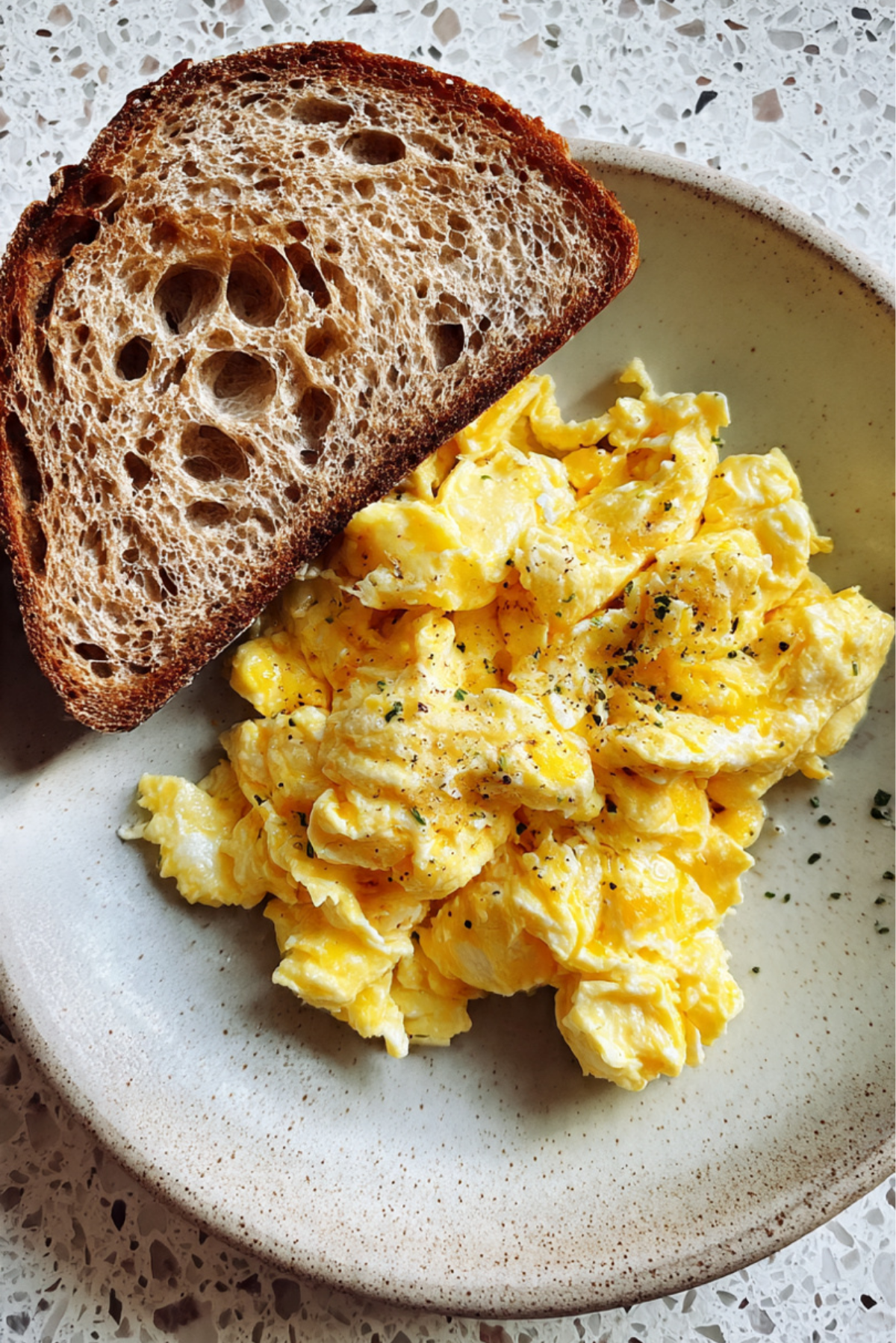
There’s something incredibly comforting about the slow swirl of eggs in a warm pan, gently coaxed into soft folds that melt like custard on your tongue. These scrambled eggs are not the dry, rubbery kind you might rush through on a weekday morning. No, these are the kind you savor, the kind that feel like a hug from the inside out. Silky, buttery, and luxuriously soft, they’re the perfect start to a slow weekend morning or a cozy breakfast-for-dinner night.
Behind the Recipe
This recipe was born from a rainy Sunday, the kind where staying in pajamas all day feels like a plan. I wanted something warm, simple, and deeply satisfying. I remembered the scrambled eggs my grandmother used to make, patiently stirring them over low heat, humming along to her favorite radio tunes. This method is a quiet homage to those mornings, where slow cooking wasn’t a chore, but a ritual.
Recipe Origin or Trivia
Scrambled eggs may seem universal, but their creamy version has a distinct European elegance, especially in the French style known as “œufs brouillés.” These eggs are cooked gently over low heat, stirred continuously to achieve that iconic custard-like texture. Unlike the firmer American version, this creamy approach celebrates patience and control, two things that make all the difference in the kitchen.
Why You’ll Love Soft, Creamy Scrambled Eggs
It’s not just breakfast—it’s comfort on a plate.
Versatile: Serve them on toast, wrap them in a tortilla, or top them with fresh herbs and cheese.
Budget-Friendly: Just a few pantry staples can turn into something truly special.
Quick and Easy: They come together in under 10 minutes, but taste like you spent all morning.
Customizable: Add herbs, cheese, or a touch of cream for your personal twist.
Crowd-Pleasing: Soft eggs feel indulgent, making them perfect for brunches or breakfast guests.
Make-Ahead Friendly: You can prep your mix-ins ahead so cooking is a breeze.
Great for Leftovers: Reheat gently and they’re just as creamy as the first time.
Chef’s Pro Tips for Perfect Results
A few small tweaks can elevate your scrambled eggs from good to unforgettable.
- Use cold butter and stir it in gradually to control the texture and temperature.
- Keep the heat low to avoid curdling and to develop that creamy consistency.
- Stir constantly with a silicone spatula in slow, gentle circles.
- Pull them off the heat when they still look slightly underdone—they’ll finish with residual heat.
- A splash of cream or milk at the end adds extra silkiness.
Kitchen Tools You’ll Need
Simple tools make all the difference when precision matters.
Nonstick Skillet: Essential for gentle, even cooking without sticking.
Silicone Spatula: Perfect for slow stirring and scraping every bit from the pan.
Mixing Bowl: To beat your eggs into a uniform blend.
Whisk or Fork: To aerate the eggs and create a fluffier texture.
Ingredients in Soft, Creamy Scrambled Eggs
Every ingredient here plays its role in achieving that luscious, creamy finish.
- Large Eggs: 4 eggs – the base of this comforting dish, rich in protein and flavor.
- Unsalted Butter: 2 tablespoons – melts slowly and enriches the eggs while preventing sticking.
- Whole Milk or Cream: 1 tablespoon – adds a velvety finish and softens the texture.
- Salt: 1/4 teaspoon – enhances the natural flavors without overpowering.
- Black Pepper: A pinch – gives a gentle contrast and slight warmth.
- Chives (optional): Finely chopped – adds a fresh, oniony bite at the end.
Ingredient Substitutions
Need to swap something out? Here’s how to keep that same texture and flavor:
Whole Milk or Cream: Use non-dairy milk like oat or soy for a creamy but dairy-free version.
Butter: Substitute with olive oil or vegan butter for dietary preferences.
Chives: Try finely chopped parsley or green onions for a different herbaceous note.
Ingredient Spotlight
Eggs: Fresh, free-range eggs will give you richer color and better texture.
Butter: Unsalted butter gives you better control over seasoning and adds a lovely glossy finish.

Instructions for Making Soft, Creamy Scrambled Eggs
If you’ve ever rushed your scrambled eggs, this is your invitation to slow things down and taste the difference. Here’s how to make them silky smooth and satisfying.
-
Preheat Your Equipment:
Set your nonstick skillet over low heat and let it gently warm up while you prep the ingredients. -
Combine Ingredients:
Crack the eggs into a mixing bowl. Add the salt and whisk vigorously until the yolks and whites are fully combined and slightly frothy. -
Prepare Your Cooking Vessel:
Add half the butter to the warm skillet. Let it melt slowly without sizzling or browning. -
Assemble the Dish:
Pour the beaten eggs into the skillet. Let them sit untouched for a few seconds, then begin stirring gently with your spatula. -
Cook to Perfection:
Continue stirring slowly in figure-eights, scraping the bottom and sides of the pan. Add the remaining butter in small pieces as the eggs begin to thicken. -
Finishing Touches:
Once the eggs look softly set but still glossy, remove from heat. Stir in the milk or cream and a grind of fresh pepper. -
Serve and Enjoy:
Transfer immediately to warm plates. Sprinkle with chives if using, and serve with toast or roasted tomatoes.
Texture & Flavor Secrets
The magic of these scrambled eggs lies in the contrast between their silky smoothness and buttery richness. Cooking them slowly allows tiny curds to form, giving them that creamy, melt-in-your-mouth texture. A touch of milk at the end adds depth and rounds out the flavor beautifully.
Cooking Tips & Tricks
Even seasoned cooks can appreciate a few tricks.
- Use a cold pan and low heat for full control.
- Whisk thoroughly to break up the egg proteins for a smoother texture.
- Stirring continuously prevents overcooking and large curds.
- Remove from heat just before they’re done—carryover heat finishes the job.
What to Avoid
Let’s keep those eggs dreamy, not dry.
- Cooking over high heat: Leads to rubbery, overcooked eggs.
- Walking away: These eggs need your full attention.
- Overmixing at the end: This can break the delicate texture you worked so hard for.
Nutrition Facts
Servings: 2
Calories per serving: 210
Note: These are approximate values.
Preparation Time
Prep Time: 5 minutes
Cook Time: 5 minutes
Total Time: 10 minutes
Make-Ahead and Storage Tips
While best enjoyed fresh, you can still plan ahead. Beat your eggs in advance and store them in the fridge for up to a day. Cooked scrambled eggs can be kept in an airtight container in the refrigerator for 1–2 days. Reheat gently over low heat with a splash of milk to restore their creaminess.
How to Serve Soft, Creamy Scrambled Eggs
Pair them with crusty sourdough toast, roasted cherry tomatoes, or sliced avocado. Serve on a warm plate with a drizzle of olive oil and fresh herbs. You can even fold them into a buttery croissant or breakfast burrito for an on-the-go treat.
Creative Leftover Transformations
Transform your leftover scrambled eggs into something new:
- Toss into a breakfast quesadilla with cheese and salsa.
- Add to fried rice for a quick dinner upgrade.
- Pile onto a piece of naan with sautéed spinach for a savory wrap.
Additional Tips
- Use room temperature eggs for even cooking.
- Serve on pre-warmed plates to keep the eggs soft and hot.
- Don’t over-season early—eggs develop more flavor with gentle seasoning at the end.
Make It a Showstopper
Garnish with edible flowers or microgreens for an elegant twist. Serve alongside jewel-toned berries and a latte for a brunch-worthy plate that’s ready for photos. A little dusting of finishing salt and cracked pepper adds sparkle and contrast.
Variations to Try
- Herbed Scramble: Add chopped dill, parsley, or tarragon.
- Cheesy Scramble: Stir in grated gruyère or sharp cheddar at the end.
- Spicy Scramble: Add a pinch of chili flakes or diced jalapeños.
- Creamy Truffle: Finish with a drizzle of truffle oil.
- Mushroom Medley: Sauté mushrooms separately and fold into the eggs.
FAQ’s
Q1: Can I make these eggs with egg whites only?
Yes, but they’ll be less rich. Add a splash of cream for better texture.
Q2: What kind of milk works best?
Whole milk or cream gives the creamiest results, but non-dairy milks can work too.
Q3: Can I microwave scrambled eggs?
You can, but it’s harder to control the texture. Low and slow on the stovetop is best.
Q4: Why are my eggs rubbery?
They were likely cooked on too high heat or left in the pan too long.
Q5: Should I season before or after cooking?
A bit of salt before cooking helps break down proteins. Finish with pepper after cooking.
Q6: Can I add vegetables?
Yes, but pre-cook them separately and fold them in at the end.
Q7: What’s the best pan for creamy scrambled eggs?
A nonstick skillet gives you the smoothest finish.
Q8: Can I use a whisk in the pan?
No, a silicone spatula is better for gentle folding and scraping.
Q9: How do I double the recipe?
Simply double the ingredients but cook in batches to avoid overcrowding.
Q10: Are these eggs kid-friendly?
Absolutely. They’re soft, mild, and easy to customize.
Conclusion
There’s something beautifully simple about soft, creamy scrambled eggs. They invite you to slow down and savor the moment. Whether you’re making breakfast in bed or just treating yourself on a Tuesday, this recipe turns humble eggs into something luxurious. Trust me, you’re going to love this.
Print
How To Make Soft, Creamy Scrambled Eggs
- Prep Time: 5 minutes
- Cook Time: 5 minutes
- Total Time: 10 minutes
- Yield: 2 servings
- Category: Breakfast
- Method: Stovetop
- Cuisine: French
- Diet: Vegetarian
Description
These soft, creamy scrambled eggs are the ultimate comfort food. Cooked low and slow with butter and a splash of cream, they’re velvety, rich, and melt-in-your-mouth delicious.
Ingredients
- Large Eggs: 4 eggs – the base of this comforting dish, rich in protein and flavor.
- Unsalted Butter: 2 tablespoons – melts slowly and enriches the eggs while preventing sticking.
- Whole Milk or Cream: 1 tablespoon – adds a velvety finish and softens the texture.
- Salt: 1/4 teaspoon – enhances the natural flavors without overpowering.
- Black Pepper: A pinch – gives a gentle contrast and slight warmth.
- Chives (optional): Finely chopped – adds a fresh, oniony bite at the end.
Instructions
- Preheat Your Equipment: Set your nonstick skillet over low heat and let it gently warm up while you prep the ingredients.
- Combine Ingredients: Crack the eggs into a mixing bowl. Add the salt and whisk vigorously until the yolks and whites are fully combined and slightly frothy.
- Prepare Your Cooking Vessel: Add half the butter to the warm skillet. Let it melt slowly without sizzling or browning.
- Assemble the Dish: Pour the beaten eggs into the skillet. Let them sit untouched for a few seconds, then begin stirring gently with your spatula.
- Cook to Perfection: Continue stirring slowly in figure-eights, scraping the bottom and sides of the pan. Add the remaining butter in small pieces as the eggs begin to thicken.
- Finishing Touches: Once the eggs look softly set but still glossy, remove from heat. Stir in the milk or cream and a grind of fresh pepper.
- Serve and Enjoy: Transfer immediately to warm plates. Sprinkle with chives if using, and serve with toast or roasted tomatoes.
Notes
- Use room temperature eggs for a more even cook.
- Don’t walk away from the stove—these eggs need constant attention.
- Serve on pre-warmed plates to keep the eggs hot and creamy.
Nutrition
- Serving Size: 1 plate
- Calories: 210
- Sugar: 1g
- Sodium: 210mg
- Fat: 18g
- Saturated Fat: 10g
- Unsaturated Fat: 6g
- Trans Fat: 0g
- Carbohydrates: 1g
- Fiber: 0g
- Protein: 12g
- Cholesterol: 370mg