

There is something almost magical about pulling a tray of homemade croissants from the oven. The kitchen fills with the warm scent of butter and baked dough, and the golden layers shimmer softly in the light. When you gently tear one open, the crisp outer shell gives way to delicate, airy layers inside. It is quiet, patient baking at its finest. Trust me, you’re going to love this. Homemade croissants are flaky, buttery, and absolutely worth every careful fold.
Why Making Croissants at Home Feels So Rewarding
Croissants have a reputation for being complicated, but they are really about rhythm and patience. The process of folding butter into dough, rolling it out, and watching the layers develop is deeply satisfying.
When done right, you get a crisp exterior and a soft honeycomb interior that rivals any bakery. This one’s a total game changer for slow weekends or special brunch gatherings.
A Little History Behind Those Beautiful Layers
Croissants may be closely associated with France, but their roots trace back to Austria. Over time, French bakers perfected the laminated dough technique, creating the iconic buttery layers we know today.
Lamination, the process of folding butter into dough multiple times, creates steam during baking. That steam forms the delicate layers that make croissants so light and flaky.
Why This Recipe Works Beautifully
Before we mix the dough, here is why this method delivers bakery style results.
Layered Perfection: Careful folding creates flaky texture.
Rich Flavor: Real butter makes all the difference.
Impressive Presentation: Looks elegant and professional.
Make Ahead Friendly: Dough can rest overnight.
Versatile: Use for plain or filled croissants.
Freezer Friendly: Freeze before baking if needed.
Perfect for Brunch: A true showstopper.
Pro Tips for Flaky Success
A few thoughtful details matter most.
- Keep butter cold but pliable.
- Chill dough between folds.
- Roll evenly to maintain layers.
- Do not rush proofing time.
- Bake until deeply golden for best flavor.
Kitchen Tools You Will Need
Preparation is key for laminated dough.
Large Mixing Bowl: For dough preparation.
Rolling Pin: Essential for lamination.
Bench Scraper: Helps move and fold dough.
Baking Sheets: Lined with parchment paper.
Pastry Brush: For egg wash.
Ingredients That Create Perfect Layers
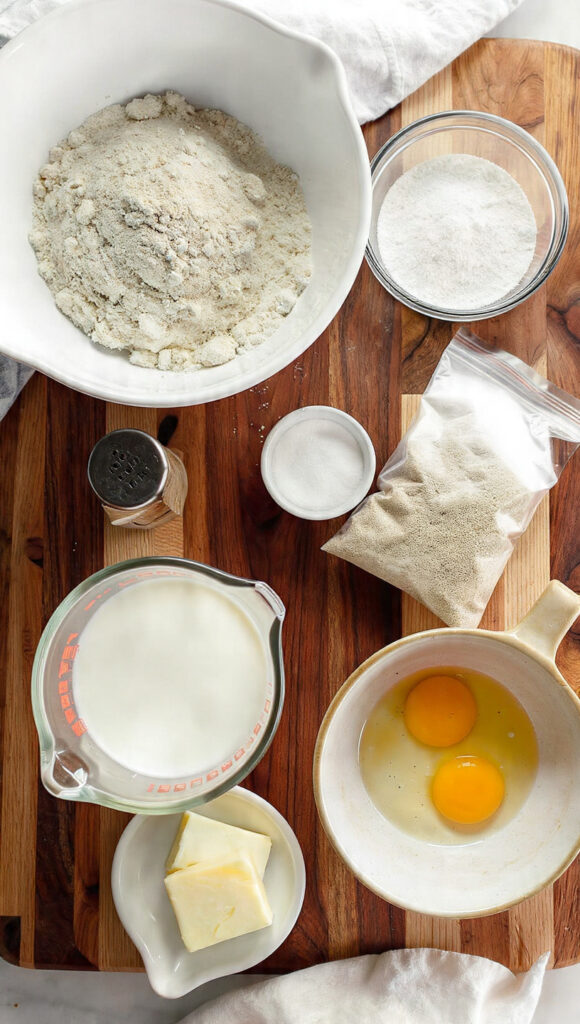
Each ingredient contributes to structure and flavor.
- All Purpose Flour: 4 cups, forms the dough base.
- Granulated Sugar: 1/4 cup, slight sweetness.
- Salt: 1 tablespoon, enhances flavor.
- Active Dry Yeast: 2 1/4 teaspoons.
- Warm Milk: 1 1/4 cups, activates yeast.
- Unsalted Butter: 1 1/4 cups cold, for laminating.
- Egg: 1 beaten, for egg wash.
Easy Ingredient Swaps
Adjust with care.
Active Dry Yeast: Instant yeast works as well.
Whole Milk: Plant based milk can substitute, though flavor changes slightly.
All Purpose Flour: Bread flour creates slightly chewier texture.
Spotlight on the Key Ingredient
Unsalted Butter: High quality butter creates the flaky layers croissants are known for. Its fat content produces steam during baking, which separates each fold into delicate sheets.
Let’s Create These Beautiful Layers
Now comes the process that transforms simple dough into something extraordinary.
- Preheat Your Equipment: Warm milk slightly and dissolve yeast with a pinch of sugar. Let sit until foamy.
- Combine Ingredients: In a large bowl, mix flour, remaining sugar, and salt. Add yeast mixture and mix into a soft dough. Knead gently until smooth. Cover and refrigerate for 1 hour.
- Prepare Your Cooking Vessel: Flatten cold butter between parchment into a thin square. Chill briefly.
- Assemble the Dish: Roll dough into a rectangle and place butter square in the center. Fold dough over butter like an envelope.
- Cook to Perfection: Roll out gently and fold into thirds. Chill 30 minutes. Repeat rolling and folding two more times, chilling between each fold.
- Shape the Croissants: Roll dough into a large rectangle and cut into long triangles. Starting from the wide end, roll tightly toward the tip. Curve slightly into crescent shapes.
- Proof: Place on lined baking sheets and let rise until puffy, about 1 to 2 hours.
- Finishing Touches: Brush lightly with beaten egg.
- Bake: Bake at 400 degrees Fahrenheit for 18 to 22 minutes until deep golden brown.
- Serve and Enjoy: Cool slightly before serving warm.
The Texture and Flavor Experience
The exterior shatters gently with each bite, revealing tender, airy layers inside. The flavor is rich yet balanced, with buttery notes that linger softly.
Helpful Tips for Best Results
- Work quickly to keep butter from melting.
- Dust lightly with flour but avoid excess.
- Rotate baking sheets halfway for even browning.
Common Mistakes to Avoid
- Warm butter can leak during baking.
- Skipping chill time reduces layering.
- Underbaking prevents full flakiness.
Nutrition Overview
Servings: 12 croissants
Calories per serving: 320
Note: These are approximate values.
Time Breakdown
Prep Time: 45 minutes active
Chill and Proof Time: 4 hours
Bake Time: 20 minutes
Total Time: About 5 hours
Make Ahead and Storage Tips
Unbaked shaped croissants can be frozen before proofing. Bake from frozen after proofing at room temperature. Baked croissants store at room temperature for 2 days and reheat beautifully in the oven.
How to Serve
Serve warm with butter and jam, alongside coffee, or split and fill with chocolate or almond cream.
Creative Leftover Ideas
Slice and toast for breakfast sandwiches. Use in bread pudding. Fill with scrambled eggs for a savory brunch option.
Additional Tips
If butter begins to soften too much, chill immediately before continuing. Patience truly pays off with laminated dough.
Make It a Showstopper
Arrange freshly baked croissants on a white platter, slightly overlapping to highlight their crescent shape. Keep presentation simple so the golden layers shine.
Variations to Try
Add chocolate batons before rolling.
Fill with almond paste and top with sliced almonds.
Brush with honey syrup after baking for shine.
Sprinkle with powdered sugar for elegance.
FAQ’s
Q1: Why did my butter leak?
It may have softened too much during rolling.
Q2: Can I refrigerate overnight?
Yes, after the first fold works well.
Q3: Why are my layers dense?
Insufficient folding or under proofing.
Q4: Can I freeze baked croissants?
Yes, reheat gently before serving.
Q5: How do I know they are done?
They should be deeply golden brown.
Q6: Is bread flour better?
It creates slightly chewier texture.
Q7: Can beginners make this?
Yes, with patience and careful steps.
Q8: How thin should I roll?
About 1/4 inch thick before shaping.
Q9: Why chill between folds?
It keeps butter firm for clean layers.
Q10: Can I make mini croissants?
Yes, simply cut smaller triangles.
Conclusion
Homemade croissants are a labor of love that reward you with unmatched texture and flavor. Flaky, buttery, and beautifully layered, they transform simple ingredients into something extraordinary. Let me tell you, it’s worth every bite. Once you master the folds, you may never look at bakery croissants the same way again.
Print
Homemade Croissants
- Prep Time: 45 minutes active
- Cook Time: 20 minutes
- Total Time: About 5 hours
- Yield: 12 croissants
- Category: Breakfast
- Method: Baking
- Cuisine: French
- Diet: Vegetarian
Description
Flaky, buttery homemade croissants with delicate laminated layers and a golden crisp exterior. Perfect for breakfast, brunch, or special occasions.
Ingredients
- 4 cups all purpose flour
- 1/4 cup granulated sugar
- 1 tablespoon salt
- 2 1/4 teaspoons active dry yeast
- 1 1/4 cups warm milk
- 1 1/4 cups unsalted butter, cold
- 1 egg, beaten for egg wash
Instructions
- Warm the milk slightly and dissolve yeast with a pinch of sugar. Let sit until foamy.
- In a large bowl, mix flour, remaining sugar, and salt.
- Add yeast mixture and mix into a soft dough. Knead gently until smooth.
- Cover and refrigerate dough for 1 hour.
- Flatten cold butter between parchment paper into a thin square and chill briefly.
- Roll dough into a rectangle and place butter square in the center. Fold dough over butter like an envelope.
- Roll out gently and fold into thirds. Chill for 30 minutes.
- Repeat rolling and folding two more times, chilling between each fold.
- Roll dough into a large rectangle and cut into long triangles.
- Roll each triangle from the wide end to the tip and shape into crescents.
- Place on lined baking sheets and let proof until puffy, about 1 to 2 hours.
- Brush with beaten egg.
- Bake at 400 degrees Fahrenheit for 18 to 22 minutes until deep golden brown.
- Cool slightly before serving.
Notes
- Keep butter cold but pliable for clean layers.
- Chill dough between folds to maintain lamination.
- Bake until deeply golden for best flavor and texture.
Nutrition
- Serving Size: 1 croissant
- Calories: 320
- Sugar: 6g
- Sodium: 320mg
- Fat: 18g
- Saturated Fat: 11g
- Unsaturated Fat: 6g
- Trans Fat: 0g
- Carbohydrates: 34g
- Fiber: 1g
- Protein: 6g
- Cholesterol: 70mg
… [Trackback]
[…] Read More on that Topic: cookingflash.com/homemade-croissants/ […]
… [Trackback]
[…] There you can find 85683 additional Info to that Topic: cookingflash.com/homemade-croissants/ […]