
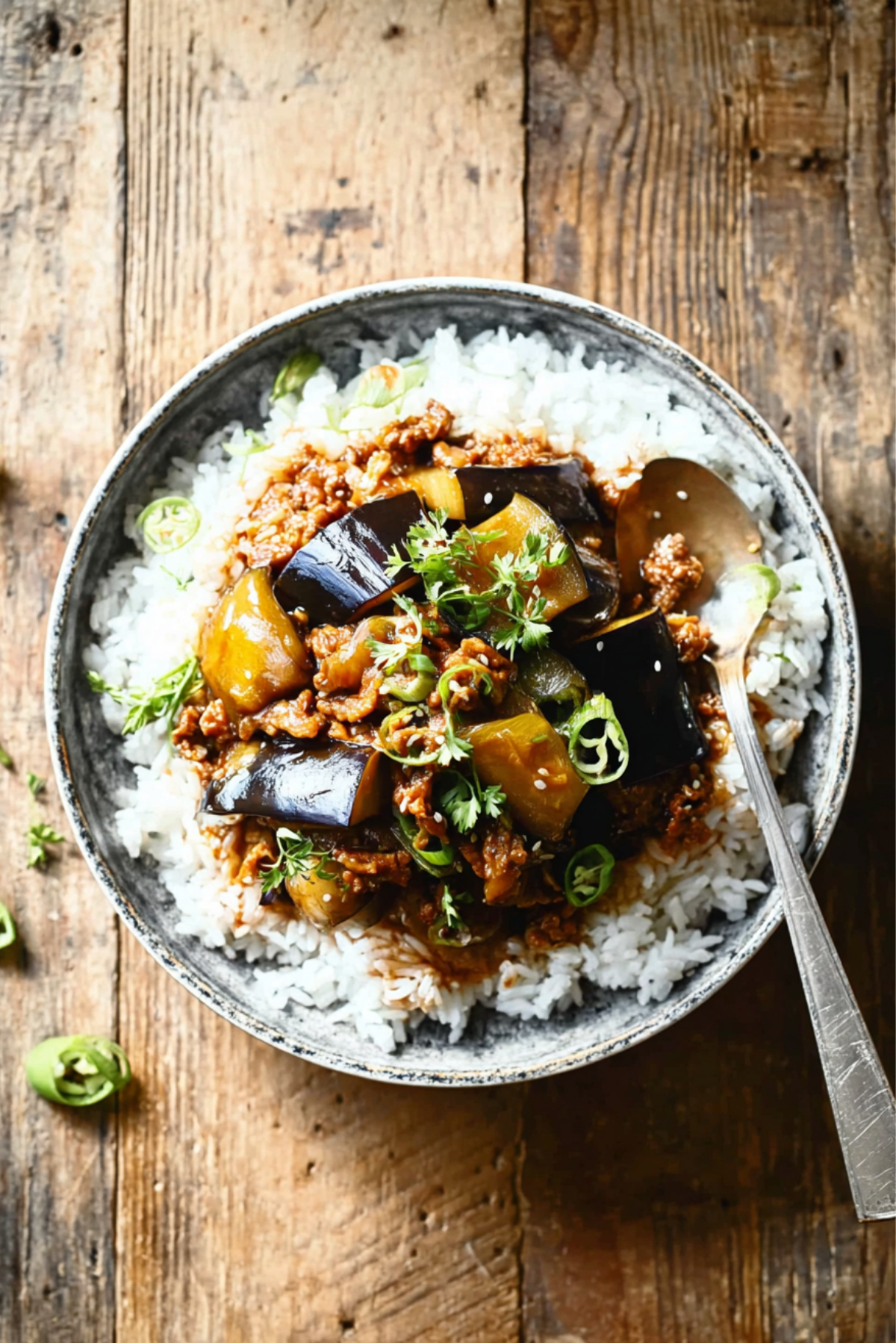
When life calls for something bold yet grounding, this Gochujang Pork and Eggplant Rice Bowls recipe answers the call. It’s the kind of meal that hits deep with flavor, yet feels at home on a weeknight table. Imagine tender pork strips glazed in sweet‑spicy Korean chili paste, mingled with silky roasted eggplant, all resting on a bowl of warm rice ready to soak everything in. Let’s walk through this together.
Behind the Recipe
It all started one Saturday when I opened the fridge and found half an eggplant from dinner the night before and some pork chops tucked away in the freezer. I had also recently picked up a tub of Gochujang (Korean fermented chili paste) and was itching to try it beyond the usual bibimbap. I ended up roasting the eggplant while the pork sizzled with the gochujang glaze, and by the end we had these rich, layered bowls that felt both adventurous and comforting. It quickly became a go‑to when I wanted something different but doable.
Recipe Origin or Trivia
Gochujang brings deep sweetness, heat, and fermented umami to Korean cooking. It’s often used in dishes like Bibimbap. :contentReference[oaicite:2]{index=2} While traditional Korean rice bowls often use beef or chicken, I swapped in pork for its richness and paired it with roasted eggplant for texture and subtle sweetness. The eggplant also bridges Mediterranean and Asian influences, giving this bowl a twist that feels both global and home‑grown.
Why You’ll Love It
Here’s what makes these bowls irresistible:
- Bold sweet‑spicy flavor thanks to the gochujang glaze.
- Tender pork and creamy eggplant combining to make each bite interesting.
- Rice bowl format means minimal fuss and maximum comfort.
- Works beautifully for meal prep or an easy one‑skillet dinner.
- Leftovers taste just as good and reheat beautifully.
Chef’s Pro Tips for Perfect Results
- Choose pork with a little marbling so it stays moist during cooking.
- Cut the eggplant into medium chunks (~1‑inch) so it roasts evenly and holds shape.
- Roast the eggplant separately on a high sheet so it caramelizes and offers texture.
- Cook the pork at medium‑high heat so the glaze brightens and clings instead of watering down.
- Assemble bowls while everything’s hot so the rice picks up those smoky, sweet juices.
Kitchen Tools You’ll Need
- Large skillet or sauté pan for pork.
- Baking sheet for roasting eggplant.
- Sharp knife and cutting board.
- Wooden or heat‑proof spatula.
- Measuring spoons and cups.
- Bowls for serving.
Ingredients in Gochujang Pork and Eggplant Rice Bowls
- 1 lb (about 450 g) pork tenderloin or pork shoulder, sliced into thin strips
- 1 medium eggplant (about 1 lb / 450 g), cut into 1‑inch cubes
- 2 tablespoons vegetable or canola oil, divided
- Salt and pepper, to taste
- 2 tablespoons soy sauce
- 2 tablespoons mirin (or rice wine)
- 2 tablespoons sesame oil
- 3 tablespoons gochujang (adjust for spice preference)
- 2 teaspoons minced fresh ginger
- 3 cloves garlic, minced
- 4 cups cooked rice (white, brown or mixed as you like)
- 2 scallions, thinly sliced
- 2 teaspoons toasted sesame seeds
Ingredient Substitutions
- Pork: Use chicken or turkey strips, or even firm tofu for vegetarian version.
- Eggplant: Swap with zucchini or mushrooms if eggplant isn’t available.
- Mirin: Use a splash of rice vinegar plus a teaspoon sugar if you don’t have mirin.
- Gochujang: If you can’t find it, mix 1 tablespoon red chili paste + 1 tablespoon miso + 1 teaspoon honey.
Ingredient Spotlight
Gochujang: This Korean chili paste gives the dish its signature flavor—sweet, spicy and deeply savory. It’s the glue that pulls everything together. :contentReference[oaicite:3]{index=3}
Eggplant: When roasted, eggplant becomes creamy, tender and slightly caramelized. It soaks up the pork juices and adds a rich, contrasting texture.

Instructions for Making Gochujang Pork and Eggplant Rice Bowls
Here are the steps you’re going to follow:
-
Preheat and roast the eggplant
Preheat your oven to 425 °F (220 °C). Toss the eggplant cubes with 1 tablespoon oil, salt and pepper. Spread on a baking sheet in a single layer and roast for 20‑25 minutes, flipping halfway, until golden and tender. -
Prepare the pork marinade
In a bowl, combine soy sauce, mirin, sesame oil, gochujang, ginger and garlic. Add the pork strips, toss to coat and let sit for 10 minutes while eggplant roasts. -
Cook the pork
Heat remaining 1 tablespoon oil in a large skillet over medium‑high heat. Add the marinated pork strips in a single layer (cook in batches if needed), and cook for about 3‑4 minutes until cooked through and glaze thickens and clings. Remove from heat. -
Assemble the bowls
Divide cooked rice among 4 bowls. Top each with a portion of roasted eggplant and glazed pork. Sprinkle scallions and sesame seeds on top. -
Serve and enjoy
Serve immediately, with optional sides like steamed greens or kimchi for extra kick.
Texture & Flavor Secrets
The interplay of textures is key: the rice is soft, the eggplant creamy and slightly caramelized, the pork strips rich and coated in a glossy sweet‑spicy sauce. Flavor‑wise, you get the deep umami from the soy and sesame, the brightness and garlic‑ginger aroma, and the gochujang’s heat‑sweet balance. Each bite is layered yet effortless.
Cooking Tips & Tricks
- If your gochujang glaze seems too thick, add a splash of water or broth to loosen it.
- For extra caramelization, after the pork is done, let the skillet sit off the heat for 30 seconds before removing—residual heat keeps the glaze tacky.
- Add a handful of fresh greens (like spinach or bok choy) to the skillet for the last minute to make the dish more complete.
What to Avoid
- Don’t overcook the pork or it will dry out—thin strips cook quickly.
- Don’t crowd the roasting pan with eggplant or it will steam instead of roast.
- Avoid pouring raw marinade into the hot skillet without separating the pork pieces—you want direct contact for browning.
Nutrition Facts
Servings: 4
Calories per serving: approx. 480
Note: Values are estimates and will vary with rice type and pork cut.
Preparation Time
Prep Time: 15 minutes
Cook Time: 25 minutes
Total Time: 40 minutes
Make‑Ahead and Storage Tips
You can roast the eggplant ahead of time and store in the fridge for up to 2 days. The pork can be cooked and kept separately; when ready to serve, warm both and assemble to retain textures. Store leftovers in an airtight container in the fridge for up to 3 days. Reheat gently until warm.
How to Serve Gochujang Pork and Eggplant Rice Bowls
Serve hot. The bowls are satisfying as is, but you can elevate them with a side of pickled cucumbers, kimchi, or a crisp Asian slaw to cut through the richness. A drizzle of sesame oil or a soft‑poached egg on top also adds luxury.
Creative Leftover Transformations
- Turn leftovers into lettuce wraps: scoop the pork‑eggplant mixture into butter lettuce leaves, add a splash of lime.
- Make a fried rice: chop leftover pork and eggplant, toss into cooked rice with soy and a bit of gochujang, then fry until hot.
- Use the mix as a filling for stuffed peppers or baked potatoes.
Additional Tips
- Use a hot skillet for the pork to get nice sear and texture.
- Adjust the spice by reducing gochujang or adding a splash of lime juice for brightness.
- Top with crispy shallots or pickled radish for crunch and contrast.
Variations to Try
- Spicy Eggplant‑Pork Bowl: Increase gochujang to 4 tablespoons and add chili flakes for more heat.
- Vegetarian Version: Use firm tofu or tempeh instead of pork and maple syrup instead of mirin for sweetness.
- Seafood Swap: Use shrimp instead of pork and add a splash of rice vinegar at the end.
- Whole Grain Bowl: Use quinoa or farro instead of rice for a different texture.
- Coconut Twist: Add a tablespoon of coconut milk to the glaze for a creamy, slightly tropical touch.
FAQ’s
Q1: Can I use pork belly instead of tenderloin?
A1: Yes—you’ll get richer flavour and a slightly crispier edge; just render some fat before adding glaze.
Q2: What if I don’t have mirin?
A2: Use 1 tablespoon rice wine vinegar + 1 teaspoon sugar to mimic the flavour.
Q3: Is gochujang very spicy?
A3: It can be—it ranges from mild to very hot. Start with a bit and adjust to taste. :contentReference[oaicite:4]{index=4}
Q4: Can I meal‑prep this?
A4: Absolutely. Keep rice, eggplant and pork stored separately until assembly to retain textures.
Q5: What kind of rice works best?
A5: Jasmine or medium‑grain white rice for comfort; brown or mixed grain for more chew.
Q6: Can I freeze leftovers?
A6: Yes—freeze pork and eggplant mixture (without rice) for up to 2 months. Thaw overnight and reheat.
Q7: How do I make it milder for kids?
A7: Use only 1½ tablespoons gochujang and add 1 tablespoon honey to the glaze.
Q8: Can I add vegetables?
A8: Yes—bell peppers, zucchini, or broccoli all work well. Add with the pork or roast alongside eggplant.
Q9: Can I skip the eggplant?
A9: Yes—but the eggplant adds texture and flavor so I recommend including it if possible.
Q10: Can I make this gluten‑free?
A10: Yes—just use tamari or gluten‑free soy sauce and check your gochujang label for no gluten ingredients.
Conclusion
There you have it—an exciting, bold, and deeply satisfying meal. These Gochujang Pork and Eggplant Rice Bowls merge Korean spice and global ease into something your whole table will rally around. Warm rice, glistening pork, smoky eggplant, a sprinkle of scallions—it all comes together. So grab your skillet, dive in, and savour the moment. You’re going to love every bite.
Print
Gochujang Pork and Eggplant Rice Bowls
- Prep Time: 15 minutes
- Cook Time: 25 minutes
- Total Time: 40 minutes
- Yield: 4 servings
- Category: Main Course
- Method: Sauté & Roast
- Cuisine: Korean‑Inspired
Description
Sweet‑spicy gochujang‑glazed pork and tender roasted eggplant served over warm rice for a bold and satisfying one‑bowl meal.
Ingredients
- 1 lb pork tenderloin or shoulder, sliced into strips
- 1 medium eggplant, cut into 1‑inch cubes
- 2 tablespoons vegetable oil (divided)
- Salt and pepper, to taste
- 2 tablespoons soy sauce
- 2 tablespoons mirin (or rice wine)
- 2 tablespoons sesame oil
- 3 tablespoons gochujang (adjust for heat)
- 2 teaspoons minced fresh ginger
- 3 garlic cloves, minced
- 4 cups cooked rice
- 2 scallions, thinly sliced
- 2 teaspoons toasted sesame seeds
Instructions
- Preheat oven to 425 °F (220 °C). Toss eggplant cubes with 1 tablespoon oil, salt and pepper. Roast for 20‑25 minutes until golden and tender.
- In a bowl, whisk soy sauce, mirin, sesame oil, gochujang, ginger and garlic. Add pork strips and coat thoroughly. Marinate for 10 minutes.
- Heat remaining 1 tablespoon oil in a skillet over medium‑high heat. Add pork strips and cook until cooked through and glaze thickens, about 3‑4 minutes.
- Divide rice among bowls. Top each with roasted eggplant and glazed pork. Sprinkle scallions and sesame seeds.
- Serve immediately. Optional: add steamed greens or kimchi on the side.
Notes
- To reduce spice, use less gochujang or add a teaspoon honey.
- For vegetarian version, swap pork for firm tofu or tempeh.
- Store components separately for best texture when reheating.
Nutrition
- Serving Size: 1 bowl
- Calories: 480
- Unsaturated Fat: undefined
… [Trackback]
[…] There you can find 77453 additional Information on that Topic: cookingflash.com/gochujang-pork-and-eggplant-rice-bowls/ […]
… [Trackback]
[…] There you can find 41337 more Information to that Topic: cookingflash.com/gochujang-pork-and-eggplant-rice-bowls/ […]